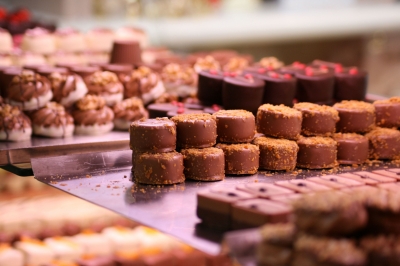
Candy bar scenes

Image by Simon Howden, courtesy of freedigitalphotos.net
Image by Simon Howden, courtesy of FreeDigitalPhotos.net

I’ve been indulging in some candy bar scenes this week. These are typically the scenes you hold off writing, because they’re the fun ones; the ones that signify major plot points or key emotional stepping-stones for your characters. You’re supposed to hang them out in front of you like a reward you get after the rest of the wordage is down.

I find, though, these are also the scenes that help me keep a story on track. They’re the ones that set the character of the whole novel, and the touchstones I keep returning to when I feel like I’m losing my way. Getting a candy bar scene down ahead of time can help me focus on where the bit I’m actually up to in the plot is heading. They’re also the points at which my characters shine brightest – where their personalities and motivations are most clear. So they also keep me focused on how I am developing the people inhabiting my story.

Typically, these are the scenes where my Muse kicks into overdrive, so they are addictive. I tend to find they leave me a bit wrung out, though. And often when I come to incorporating them into the story as a whole (imagine a kind of literary connect-the-dots), I find they are heavy on emotion, but lacking in the kind of world-building depth that really brings a story to life. That’s fine, though. That’s what first drafts are for, after all.

For me, the key issue is balance. If I write all my candy bar scenes all at once, I just end up with a bunch of disjointed, high energy scenes that don’t actually tell a story. I confess, this was pretty much how I approached writing in my teens. I’m not sure if it was the teen thing, or an overdose of candy, but the other problem I experienced with this approach is that what I ended up with was also kind of melodramatic and silly. Also, I ran out of energy to write the bits that knitted the story together as a whole.

But if I just try to slog it out from beginning to middle to end, I get lost in the fog of the present and can’t see where I’m going, or how to get there.

I like to think of it as finding my way by following a kind of trail of candy through the forest of my unwritten draft.
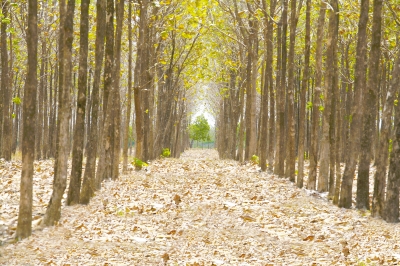
Image courtesy of David Castillo Dominici at FreeDigitalPhotos.net

Brewing Community: a blog series over on Earl Grey Editing

Brewing Community. Photo by Chris Fitzgerald. Used with permission.

Elizabeth Fitzgerald is doing a great blog series on Brewing Community over at Earl Grey Editing. Today’s post is from my good friend Ian McHugh about the anthology he is currently co-editing for the Canberra Speculative Fiction Guild. (Full disclosure: it might mention me, as a kind of case study.) Typically, it’s a pretty funny read.

Last week’s post (and the first in the series) was the “author origin story” of Australian author, reviewer and Aurealis Awards judge Stephanie Gunn.

Check it out!

Research: the perils of doing it whilst tired

I’ve been concentrating a lot lately on Novel Project #4, which is set in London in the 1760s. There’s loads of reserach material to forge through, and I have to admit it is, at times, distracting.

Today I’ve been focusing on familiarising myself with 18th Century London – trying to work out what shops existed and where, what were the nice areas to live in and what were the not-so-nice, that sort of thing. Owing to this period holding an enduring fascination with readers and writers, there is a wealth of information available, which is fantastic.

You just have to make sure you’re reading it properly.

For example, the following paragraph, on a site describing the residents of Buckingham St since its establishment in the late 17th Century, gave me something of a start:

The “Lady Kilmurray” shown in the ratebooks of 1680–1 must have been an undertenant of Dearham’s. She was probably the daughter of Sir William Drury of Besthorpe, Norfolk, and the widow of Charles Needham, 4th Viscount Kilmorey, who had died in prison in 1660 for the second time.

On re-reading it, I worked out I’d missed a line, which rendered the paragraph somewhat more conventional:

The “Lady Kilmurray” shown in the ratebooks of 1680–1 must have been an undertenant of Dearham’s. She was probably the daughter of Sir William Drury of Beesthorpe, Norfolk, and the widow of Charles Needham, 4th Viscount Kilmorey, who had died in prison in 1660. Her second husband, Sir John Shaw, baronet, died in March, 1679–80, so that she was a widow for the second time.

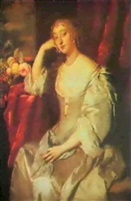
Bridget, Viscountess Kilmorey, whose first husband had sounded so very interesting.

Bridget, Viscountess Kilmorey

And here’s her second husband, Sir John Shaw.
Sir John Shaw, Baronet