The Never Never Land – ebook coming soon!

promotionalnevernever
The Never Never Land

Well, here is some exciting news! The Never Never Land anthology, containing my story “Adventure Socks”, is due out in ebook on 1 July!

To celebrate, CSFG are hosting some interviews with authors from the anthology.The first one up is Thoraiya Dyer, whose debut novel Crossroads of Canopy, set in a giant rainforest, is due out from Tor in January 2017.

More things that make you go “Hmm…” – Ganymede

I have been doing some research on pre-18th century paintings of Greek myths lately, and I came across this interesting description by the Museo Del Prado of the Peter Paul Rubens painting “The Rape of Ganymede”, which is in its collection:
Jupiter was so taken with Ganymede´s beauty that he transformed into an eagle to carry her off to Mount Olympus, where she became his cup-bearer. Rubens drew this story from the classical poet, Ovid´s Metamorphoses (X, 155-161). He depicts the moment when the eagle catches the young shepherdess and lifts her into the air.

GanyrubnUh…just one problem. Ganymede was a bloke. The story is otherwise bang on.

 I am fascinated as to how or why the Museo Del Prado has fluffed this one up. The fact that Ganymede is male is key to the enduring fascination with this particular story. By all (other) accounts, the Ganymede myth was held as an expression of the acceptance of homosexual relationships in Ancient Greece.

And it’s not like you could actually mistake the Ganymede in Rubens’ painting for a girl. It also doesn’t look to me like Rubens was tiptoeing around the core element of this story. I mean, look at the placement of that quiver, for goodness sake.

It’s all very strange and a little bit hilarious.

Rant by an irrelevant Australian writer about something that has nothing to do with writing and everything to do with governments doing what they’re paid to do

*Language warning*

Oh Orlando.

Oh America.

I get that America is as diverse in its makeup and opinions as anywhere else – possibly even more so. I know that all the Americans of my acquaintance are as horrified at this ongoing insanity as I am.

But when will I cease to be dismayed by America’s collective continued inability to respond in a coherent fashion to its gun crisis?

I’m just an Australian. I can’t do anything more than express my horror and offer my consolations. I have no power to do anything else. This post by John Scalzi made me weep with helplessness. What compounds my sense of horror and hopelessness is the knowledge that when this shit went down here in 1996, our government acted immediately and decisively. To be clear: I am not blaming ANYONE for the legal and policy framework that allows this travesty to continue in the US other than the people who are squarely and unequivocally at fault: The US Government.

So my message to them is: Pull your fucking finger out. Stomp on some fucking toes. Offend some people. Lose a shitload of donations to your coward-arse parties. Lose some fucking seats. You don’t fucking deserve them.

Guns are not the only issue an Australian government has acted on decisively, BTW. In the 1980s when the AIDS epidemic was gearing up, the New South Wales and Australian governments decided to focus on the key issue of simply stopping the spread of the disease by any means. Scruples about promoting promiscuity or prostitution or intravenous drug use or – quelle horreur! – being seen to condone gay sex were unceremoniously sidelined in their bid to simply get those people most at risk to start taking measures to keep themselves safe. As a result we have the safest blood supply in the world and the epidemic never happened here in the way it did almost everywhere else.

Moral of the story: the risk of people dying in large numbers as the result of your policy fuck up is the worst fucking risk you can fucking face as a government. America, you fucking failed. Now get the fuck back up, sideline all your other shit and get this job done.

orlando
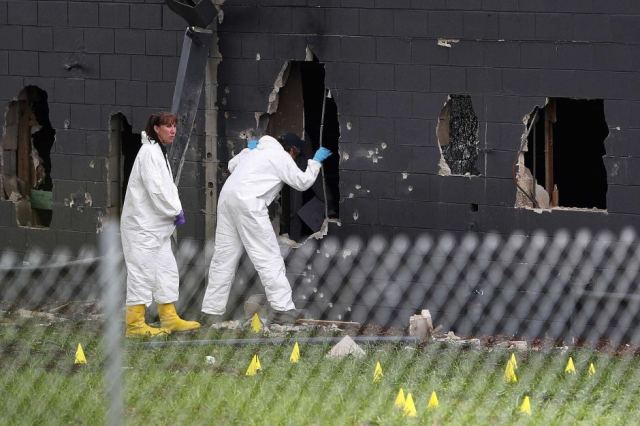
Not a war zone. FBI agents examining the damaged rear wall of the club.

HARDCOPY 2016 – the first installment

On the weekend starting Friday 27 May I attended the first workshop for the 2016 HARDCOPY program at the ACT Writers Centre. I confess this post is overdue, but it’s taken me this long to write it out because, wow, that weekend was intense.
2016_HARDCOPY+tag_ColourWhere do I start? Let me set the scene. I was one of 30 Australian writers from all over the country, selected from something like 100 applications to the program. There were people writing in a range of genres, from literary fiction, crime, young adult realism, young adult fantasy, adult fantasy and science fiction, even a verse novel. There were writers creating everything from fun stuff to read (I place myself at this end of the spectrum) all the way through to people making serious Art. It was simultaneously terrifying, inspiring, intimidating and affirming.

It was utterly intimidating to realise just how talented the other people in the room were, and, to a certain extent, what my work is competing against in the broader market. On the other hand, it was quietly affirming to understand that the assessors had reviewed my submission and thought I belonged in that room, too.

It was absolutely terrifying working through the various aspects of our manuscripts over that weekend and realising just how much hard work lies ahead. (And I haven’t even finished the first draft of this particular novel project!) But the flip side was having the golden opportunity to spend 3 days immersed in my writing, and coming out with a clear sense of purpose and a fresh set of ideas.

I’m pretty sure all the writing workshops I’ve done to date have been with authors, and there’s nothing more valuable than learning from someone who is doing what you want to do, and doing it well. By contrast, however, Nadine Davidoff, who ran this year’s HARDCOPY intensive manuscript masterclass, is a highly respected freelance editor. It gave me a different perspective being led through the masterclass by someone whose job it is not to do the beautiful writing, but to pick apart the writing and understand when and why it’s not working and suggest ways of making it better. Nadine turned a razor-sharp, critical eye on every facet of what makes up a novel, and encouraged us to apply our own critical thinking to these things as well.

Then, of course, there was the simple pleasure of sitting down at the end of the day with a bunch of other people who share my passion for words and stories, who’ve been thinking deeply on the things my mind has been occupied with, and just yakking away over drinks and dinner about anything and everything to do with writing. That never gets old.

Most of the time, when you read a book, you only get to see the finished product. Hopefully you’ve chosen a Really Good Book, so you’re holding in your hands a near-perfect balance of intriguing ideas, compelling characters, immersive world building, plot tension, authentic emotion and beautiful turns of phrase. What you don’t get to see – even if you’re beta-reading an early draft for a writer friend – are the long silences when the ideas and words don’t come. Or the tangled, mangled words that don’t mean the thing you want them to mean. Or the acres of grey fog between brightly shining key plot points. Or the hours of (figuratively) smacking your skull to try to beat some tiny, misshapen, vague blobs of something into coherent ideas you can’t even begin to hone with words until you can see them clearly.

Sometimes it’s really hard to keep going.

The most valuable thing I got out of HARDCOPY was that all this is part of pretty much every writer’s journey. (You hear it a lot, but it can be hard to know.) Being in a room with 30 other people, some of whom are pretty far along the road to publication, and hearing that we’ve all had the same struggles; hearing from Nadine, who gave us plenty of examples of successful, nameable writers who have slogged through the same word-tangles and plot-fogs; that was gold. What I got from all that was that I am on the right track. Sometimes I don’t have a map or I’ve wandered into a briar-patch or stepped in a puddle and I can’t feel my feet they’re so cold, but these are the same briar-patches and mud puddles and vague wandering paths that have been trekked by countless writers before me.

This gig is a confidence game, and at its core you’ve gotta be the one to decide whether or not you can cut it. But it’s a long, long windy road to producing literature, and having the opportunity to participate in programs like HARDCOPY can give an emerging writer just exactly the boost they need to stay on the path.

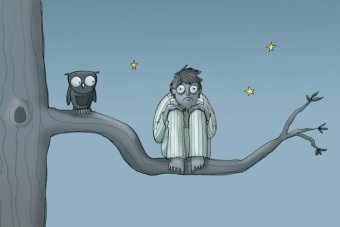
Insomni-argh

insomnia

I don’t know how many of you writerly types out there suffer from insomnia – but I do. It’s currently 1.40am and my feet are too hot to sleep. Also, it’s a full moon, which, weirdly, seems to be a thing with me and insomnia.

It’s definitely linked to bouts of creativity and not being able to turn my brain off. I used to suffer from it a lot – upwards of 5-6 nights a month when I mostly wrote at night. (Here’s me talking about it over on David McDonald’s blog as part of his excellent Paying For Our Passion series.) A couple of years ago I switched to getting up early and doing most of my writing then (which was not easy for a natural night owl, btw) and this had a transformative effect on my sleep habits. Now I generally only get one night’s worth of insomnia every couple of months, which is a definite improvement.

But, guess what, tonight’s clearly the night. Because here I am, sitting on the couch playing mah-jong and drinking a glass of wine at 2am, whilst sugar-plums dance in my head. Sigh.

Wishing you all a good night’s sleep.

Writing minds-eye candy

Today has been a good day. Today I have been working on a couple of scenes in my WIP involving a handsome 18th century man in various states of deshabille. It’s always important to get the details right, so here are a few helpful images I’ve been using for research and inspiration.

Firstly, you’ve got to get the clothes right. That gap at the neck of the shirt is very important. (We’ll get to what’s under it in a minute.)

Then you have to ensure you understand just how it sits. How far down does that gap go? Exactly what can you see? Some images are more helpful than others. Some are just pure distraction. *fans self*

From there, I’m afraid, we move straight to the pics of Aidan Turner and Sam Heughan shirtless. Because getting anatomy right is important. It is.


Autumn morning

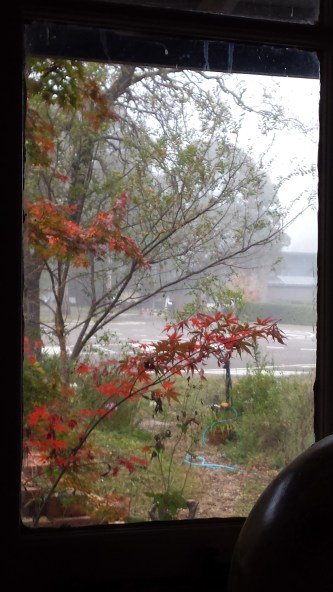
Here’s the view from my study window this morning.

2016-05-18 07.39.03

Autumn had a late start in Canberra this year, but it’s here now. We haven’t had a whole lot of fog yet, but clearly it’s on its way.

And, in other news, the WIP is now sitting on 81,000 words! And I’ve kicked a couple of important plot milestones over the goal line, so whichever way I count it, I’m making progress. Also, because I’m starting to get glimpses of the light at the end of the tunnel, I’ve started planning a new suite of short stories to get into once I’m done with the first draft of this manuscript.

Onwards and upwards. Or something.

Things that make you go “Hmm…”

I’ve been doing a bit of trawling through Wikipedia today, building up a list of historical personages to use as extras in my current WIP. And I came across this lady:

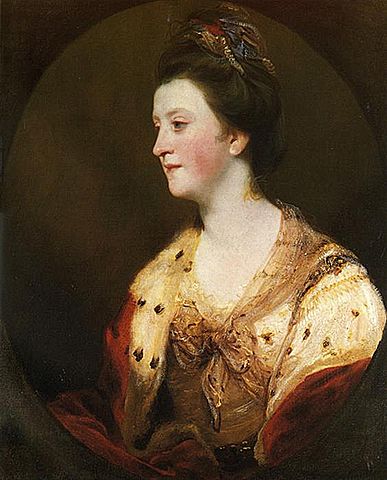
387px-Emily_Duchess_of_Leinster_1770_s
The Duchess of Leinster as painted by Sir Joshua Reynolds in the 1770s;  courtesy of Wikipedia

Emily Lennox was (according to Wikipedia) married to James Fitzgerald, the Earl of Kildare (and later Duke of Leinster), in 1747, when she was “almost 16”. That is, when she was FIFTEEN.

Apparently the marriage was a happy one.

Well, good. Because the couple had 18 children. That was not a typo. Here, I’ll write it out, just to make sure: eighteen.

Actually, there were 19 children “of the marriage”, but the last kid, born in 1773 was actually the son of the tutor of the Fitzgerald brood, one Mr William Ogilvie. When James Fitzgerald died, in November of 1773, Emily married Ogilvie the following year (which, understandably caused something of a sensation.)

She then went on to have THREE MORE CHILDREN with her new husband!

So that’s a total of 22 children. In an age where childbirth was absolutely a matter of life and death for the mother. No antibiotics. No blood transfusions. No safe surgical procedures. No anaesthetic.

Wow.

Sadly, and predictably, twelve of her children predeceased her. Of those, nine died by the age of 10. Her eldest child, George, died when he was 17 and two others died in adulthood.

Just one other interesting thing I noted concerning the difficulties posed by such an enormous amount of offspring: obviously finding suitable names posed a challenge. She had two daughters named Louisa, two named Charlotte and two named Caroline, as well as two sons called George (ironically, George and George were her eldest children by each of her two husbands.)

Inspiration from Miyazaki

miyazaki
(Picture links to the video – because I’m such a techno-numpty I can’t work out how to embed it.)

The video I’ve linked to above beautifully articulates what I feel about most of my own characters (male and female). I love the idea of them finding a ‘team mate’ rather than a saviour; a partnership neither of them can do without; someone with whom they make a whole that is more than the sum of its parts.