Brewing Community: a blog series over on Earl Grey Editing

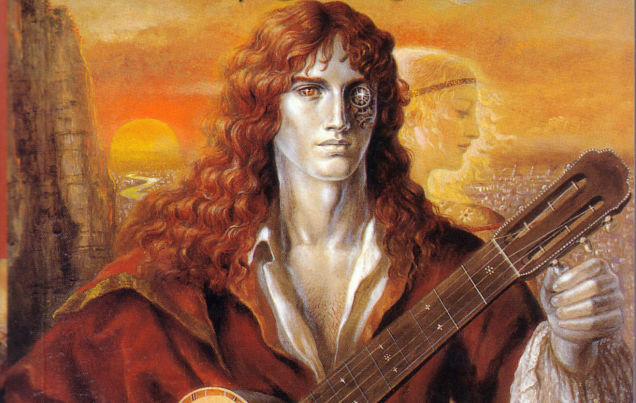
Brewing Community. Photo by Chris Fitzgerald. Used with permission.

Elizabeth Fitzgerald is doing a great blog series on Brewing Community over at Earl Grey Editing. Today’s post is from my good friend Ian McHugh about the anthology he is currently co-editing for the Canberra Speculative Fiction Guild. (Full disclosure: it might mention me, as a kind of case study.) Typically, it’s a pretty funny read.

Last week’s post (and the first in the series) was the “author origin story” of Australian author, reviewer and Aurealis Awards judge Stephanie Gunn.

Check it out!

Research: the perils of doing it whilst tired

I’ve been concentrating a lot lately on Novel Project #4, which is set in London in the 1760s. There’s loads of reserach material to forge through, and I have to admit it is, at times, distracting.

Today I’ve been focusing on familiarising myself with 18th Century London – trying to work out what shops existed and where, what were the nice areas to live in and what were the not-so-nice, that sort of thing. Owing to this period holding an enduring fascination with readers and writers, there is a wealth of information available, which is fantastic.

You just have to make sure you’re reading it properly.

For example, the following paragraph, on a site describing the residents of Buckingham St since its establishment in the late 17th Century, gave me something of a start:

The “Lady Kilmurray” shown in the ratebooks of 1680–1 must have been an undertenant of Dearham’s. She was probably the daughter of Sir William Drury of Besthorpe, Norfolk, and the widow of Charles Needham, 4th Viscount Kilmorey, who had died in prison in 1660 for the second time.

On re-reading it, I worked out I’d missed a line, which rendered the paragraph somewhat more conventional:

The “Lady Kilmurray” shown in the ratebooks of 1680–1 must have been an undertenant of Dearham’s. She was probably the daughter of Sir William Drury of Beesthorpe, Norfolk, and the widow of Charles Needham, 4th Viscount Kilmorey, who had died in prison in 1660. Her second husband, Sir John Shaw, baronet, died in March, 1679–80, so that she was a widow for the second time.

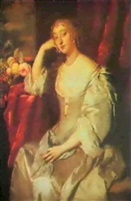
Bridget, Viscountess Kilmorey, whose first husband had sounded so very interesting.

Bridget, Viscountess Kilmorey

And here’s her second husband, Sir John Shaw.
Sir John Shaw, Baronet

Reading for writing: reflections on a recent read

Coffee time

I finished one of my latest reading-for-pleasure ventures recently, and it gave rise to some useful reading-for-writing introspection and analysis I thought might be interesting to share. The thing was, it certainly had its flaws – some extremely annoying ones at that. But, even so, I found it an overall satisfying read and I’m even keen to seek out the next one in the series and give that a go.

So what’s all that about? How does that work?

And, more importantly (and in keeping with the theme of my earlier reading-for-writing posts), what can I learn about this for my own writing?

First, the flaws.

The story was a whodunnit. Not an actual murder mystery, but a tale of two people trying to solve a spate of serious crimes, in which their lives were very much at stake if they failed.

The villain turned out to be someone known to the protagonist – in fact, someone the protagonist knew well and admired. (OK so far. A bit standard-operating, but solid.) The villain also turned out to have an intimate connection with the arch-enemy of the protagonist’s off-sider and potential love interest. (More interesting.)

What bugged me about the way the plot was constructed, however, was that the villain didn’t get any screen time (so to speak) until the big confrontation at the end. Sure, the narrative had mentioned this character, and had even done so in conjunction with an important clue. But the reader never got to actually meet the villain in her lamb’s clothing, never got to witness the relationship between her and the protagonist, and never even got the slightest hint about the existence of someone with this kind of relationship to the arch-enemy.

The effect of this was that:

  1. The reader couldn’t involve themselves in unravelling the mystery with the characters by pulling together their own theories and testing these against the characters’ sleuthing abilities. There was no Ah-ha! moment where we saw how the puzzle pieces fitted together, because we never knew half the pieces existed.
  2. The reader was unable to engage with the protagonist’s sense of gut-punch betrayal when the identity of the villain was revealed. Further, during the climactic scene, when the villain behaved in a way calculated to provoke a particular emotional reaction from the protagonist, the reader had to be told she was experiencing this reaction, rather than experience it with her (which we would have been able to do, had we been able to build our own relationship with the villain earlier in the story.)
  3. The connection to the off-sider’s arch-enemy came off as ridiculously convenient. It could have been a revelation. But it was essentially meaningless.

So what did I learn from this?

Seed key plot devices early, whether they’re characters, emotional connections or information.

But why did I like the book?

This is actually more important than the book’s flaws, because it’s this that has me hooked and interested in getting hold of the next one. I have to say, it’s embarrassingly simple.

Frankly, it was all down to the two main characters and the relationship between them. I’m not sure it was exactly a romance, but it was intriguing, and emotionally charged, and I want to know where they go next.

And what does this teach me?

Make my characters, their relationships and their emotional journeys arrestingly interesting. (Note: interesting does not mean tortuous or outlandishly dramatic. It means relatable, charismatic and one step away from being completely satisfying.)

Paying for our passion – writing v. sleep

If you haven’t checked out the excellent Paying For Our Passion series of guest author blogs David McDonald is doing over at Ebon Shores, I highly recommend it. Mostly because of the insight it provides into how different writers make this writing thing work, but also because (full disclosure) my guest blog went up yesterday.

Here’s what David has to say about his inspiration for the series:

Juggling your creative time with a full time job can be draining at the best of times, how much more so when you feel like the time put into writing is being wasted because it isn’t immediately a huge success? And, what about people who have to juggle being a parent or a full time carer as well? People with a chronic illness? How do they cope?

Because this is a personal issue, we often keep it to ourselves. Worse, sometimes we don’t talk about it because we think everyone else is living the rockstar writer lifestyle and we are the only ones struggling to find that balance–and we don’t want to look like a failure. I thought this was a subject worth exploring, and hopefully seeing how others deal with these challenges might a) help new writers realise they aren’t alone b) give us all ideas that might help.

So far, David has had guest posts from a range of Australian authors and editors, and has even started profiling some New Zealand authors after a recent trip there. I highly recommend the post from writer and poet Maureen Flynn as one that’s particularly moving.

So, what I have I sacrificed in the pursuit of literary glory? Well, the hint is in the title of this post. It’s fair to say my creative career can be characterised as a constant battle to balance the conflicting needs for sleep and writing time. Go read the article, and check out some of the others!

A tweet from a total stranger

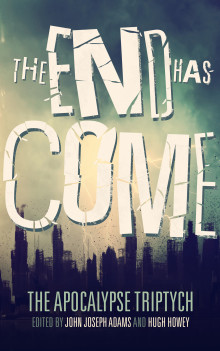
The End Has Come
The End Has Come

I’ve had a couple of lovely surprises this week. Firstly, Best SF posted this lovely review of Wandering Star in John Joseph Adams and Hugh Howie’s The End Has Come.

Then, a couple of days later, this arrived in my Twitter feed:

It’s beyond wonderful when a total stranger takes time out of their day to tell you they’ve enjoyed your work. But not only that, when the feedback you get tells you someone got your story & that it affected them the way you hoped it would… That’s completely priceless.

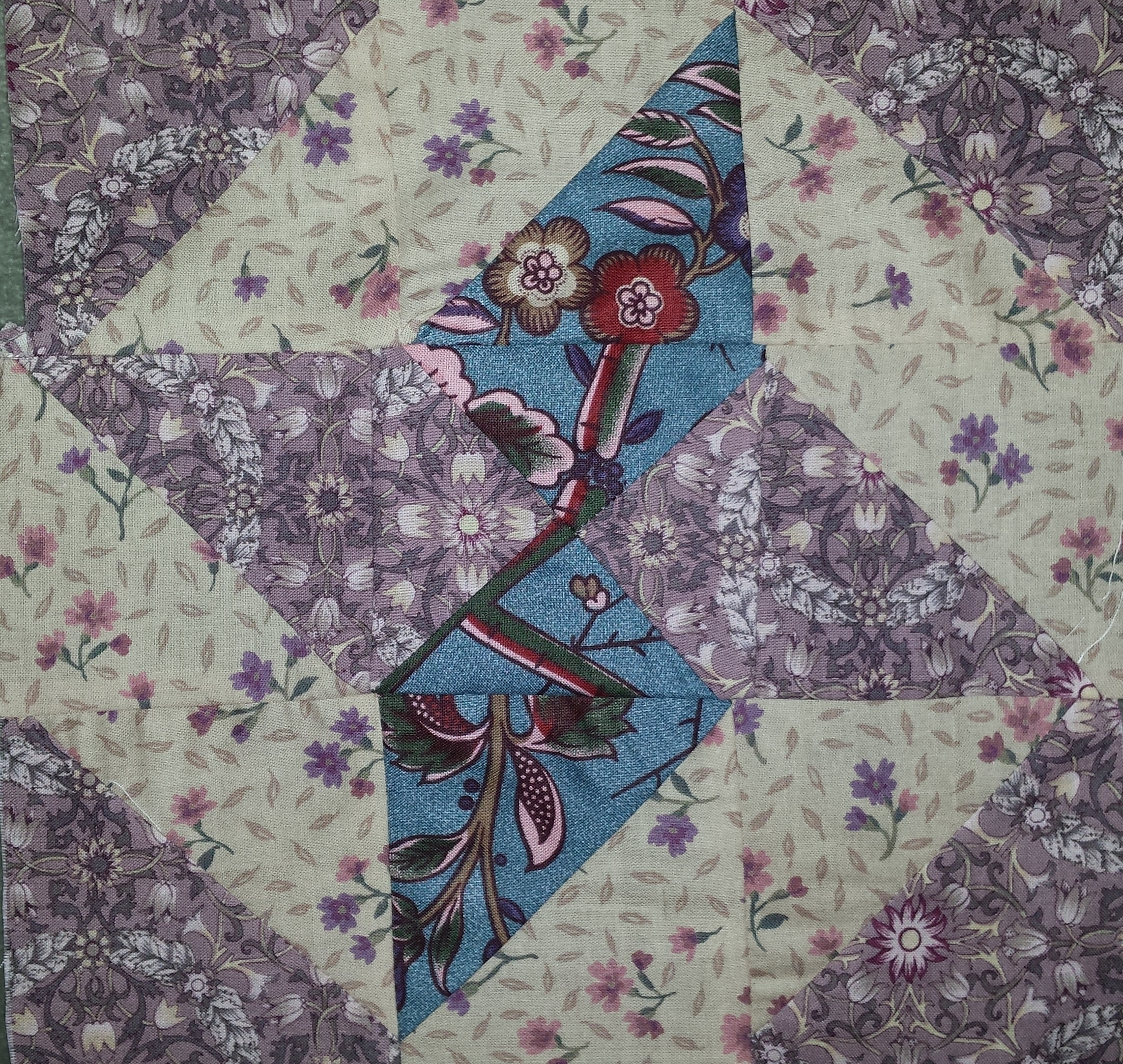
A really quick & wonky Wandering Star block I put together this morning.

Vale Tanith Lee

Such tragic news – updates on what I did last weekend will have to wait. News stories state she died in her sleep on Sunday after a long illness. She was 67.

I think Tanith Lee may have been the first “adult” author I read. I remember surreptitiously picking up a copy of Red As Blood, Or Tales From The Sisters Grimmer that was lying next to the spare bed in my mother’s house, and sneakily (because I wasn’t sure if I was allowed) reading all those dark, fantastical, twisted fairy tales, one by one. I vividly remember reading the first story, Paid Piper, and being both puzzled and fascinated by the familiar-but-different tale. In fact, I can remember my initial reaction to almost each and every tale from that small volume.

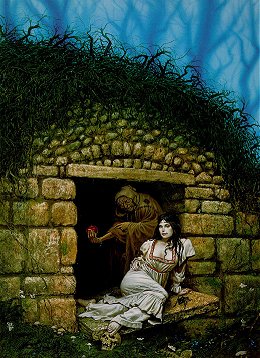
Michael Whelan's cover art for the Daw edition of Red As Blood
Michael Whelan’s cover art for the Daw edition of Red As Blood

(And how about that cover art by Michael Whelan? He managed to make Snow White look both sultry and horrific. Eleven-or-twelve year old me was terrified by that sensual image – but I kept going back and sneak-reading the next story.)

I’ve written previously about books that have helped formed the landscape of my imagination in some of my previous “reading for writing” posts. Well, this book is the bedrock.

It’s by no means the only one of hers I’ve loved. If you want some recommendations, Silver Metal Lover is rightfully iconic, and her Tales From The Flat Earth series showcases just exactly what wonderfully Byzantine, mythic story-telling she was capable of. The other stand-out, for me, is Drinking Sapphire Wine/Don’t Bite the Sun, which, like Silver Metal Lover is sci-fi rather than fantasy – but fantastical, strange and darkly beautiful science fiction. And, of course, her short stories, which I first tasted in Red As Blood. They are legion in number, scattered from here to the ends of the Earth; all filled with the arcane and evocative imagery she was famous for and threaded through with a rich vein of eroticism.

Silver Metal Lover, cover of the 2001 Voyager edition by Kinuko Y Craft

The news articles I have read about her death say she struggled to get her work published in recent years, which is a crying shame. This woman was an artist, and her incredible work has played no small part in shaping my own muse. When I write, if I get the slightest twinge of what I feel when I read her, I know I’m on the right track. I can only hope that following her passing, some of her unseen stories will be published in tribute to the body of work she produced during her lifetime.

Vale, Tanith Lee. And thank you, thank you, thank you.

Tanith-lee
Tanith Lee 19 September 1947 – 24 May 2015


Research: fencing

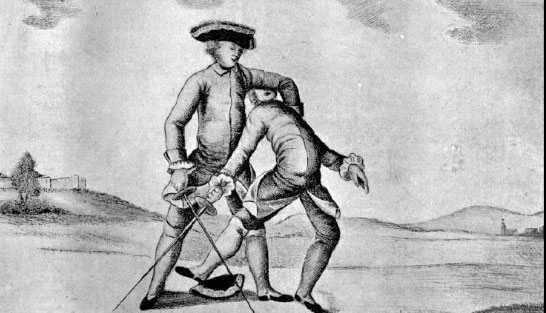
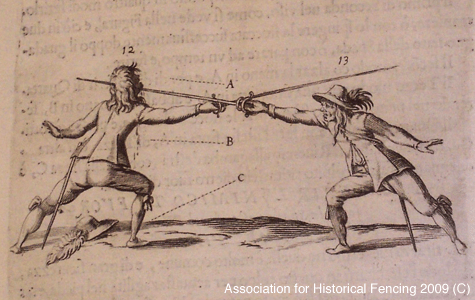
Tonight I’m doing some research on fencing schools in London in the 18th century. So have some awesome pictures of 18th century fencing.

smallsword 1

smallsword 2

fencing

Being a very visual person, I do a lot of searching for useful images. So I was very puzzled when my last lot of Google image searching on fencing schools produced an abundance of images like this:

school fencingSigh. We live and learn to refine our search terms.


It’s here! The End Has Come!

The End Has Come
The End Has Come

Whoohoo! It’s wild and free!

Today is the release date for The End Has Come, the last volume in the Apocalypse Triptych edited by John Joseph Adams and Hugh Howey, containing my story Wandering Star.

Here’s what it says on the cover:

Famine. Death. War. Pestilence. These are the harbingers of the biblical apocalypse, of the End of the World. In science fiction, the end is triggered by less figurative means: nuclear holocaust, biological warfare/pandemic, ecological disaster, or cosmological cataclysm.

But before any catastrophe, there are people who see it coming. During, there are heroes who fight against it. And after, there are the survivors who persevere and try to rebuild.

THE APOCALYPSE TRIPTYCH tells their stories.

My story, Wandering Star, is a bit of a funny one, because it’s not strictly about what happens after the apocalypse. It’s built of glimpses from both before and after the apocalypse, and is about loss – loss of the future, but also loss of the past.

The End Has Come contains new stories from the likes of Seanan McGuire, Elizabeth Bear, Ken Liu, Jonathan Mayberry, Nancy Kress, Charlie Jane Anders, Hugh Howey and loads more. At the moment it’s available in trade paperback and for Kindle from Amazon, with other ebook formats to follow on 1 August.

I hope you enjoy it.