Using POV to untangle plot

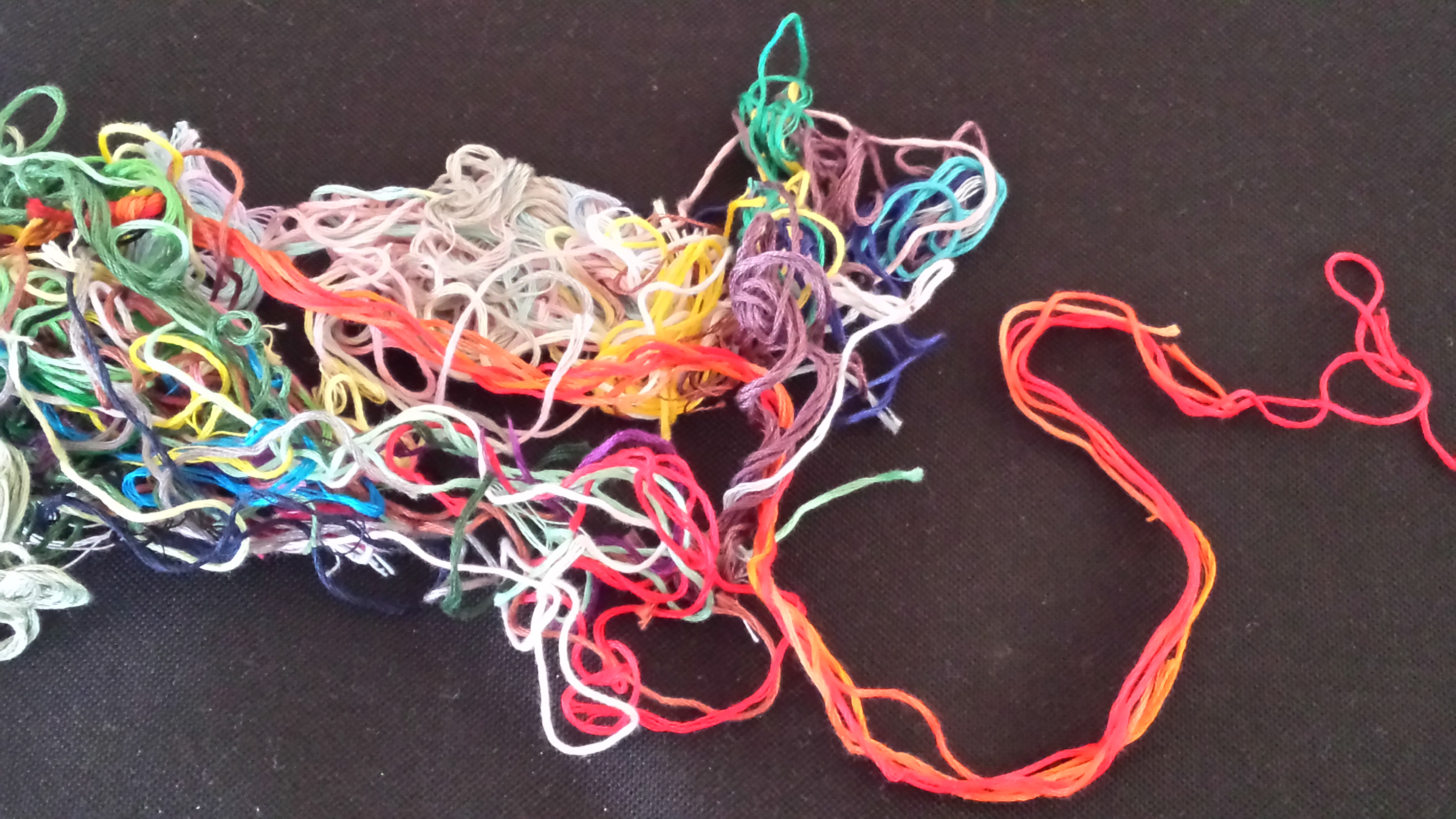
Tangled threads 2


A little while ago I decided I needed a clearer perspective on the villain’s story in Novel Project #3. So I sat down and plotted the story-so-far from his perspective. This proved to be an interesting exercise.

Humiliatingly, I discovered the plot actually didn’t work from his perspective. I had him on one side of the country on one day, then popping up on the other side of the country a few days later with no plausible reason for how he got there, or, worse, why he might have wanted to travel in the first place.

Learning No. 1: plotting your story from alternative viewpoints (even if the story is never told from these viewpoints), is a valuable tool for uncovering plot holes.

Then, I got stuck. I got to a point in the story where I couldn’t work out what should happen next. I knew where I wanted my heroine to end up, but there was a hefty gap between where she was and where she needed to be, and I couldn’t think of anything interesting to fill it. I had that sense of having to write some stuff to fill time before the next chunk of story started, and we all know what a mortal blow that is to plot.

I’d had a sense for a little while that my backstory needed more work, and that some of the plot points so far weren’t quite as convincing as they should be. And what do you know. When I went back and did the work on the backstory that it needed, my story came to life again. By understanding more about what was going on with my villain and a couple of the supporting characters, I understood what else was going on in my story that would galvanise the next chapter of action and excitement. I couldn’t see it before, because I was only looking at it from my heroine’s perspective, and she has no idea about this other stuff that’s going on.

Learning No. 2: Not everything important that is happening in your story is going to directly involve your protagonist, even if it does end up affecting her. Plotting your story from alternative viewpoints will enable you to understand the other currents flowing through your plot, and to know when and how their effects will manifest for your protagonist.

Music for an Ivory Violin – reviewed on Tangent!

Aurealis #74
Aurealis #74

I’ve finally had a chance to do some catching up on stuff, and look what I found: Chuck Rothman has reviewed Aurealis #74 on Tangent Online! He says Music for an Ivory Violin is:

 … an interesting tale of a unique form of revenge that avoids some of the problems with revenge stories.

Well. That’s quite good to hear. Thanks, Chuck!

(I wonder what revenge story problems I’ve avoided?)

Conflux 10

Spectacular artwork for Conflux 10 by Shauna O'Meara
Spectacular artwork for Conflux 10 by Shauna O’Meara

As usual, Conflux was a whirlwind of delights. I caught up with writer friends from all over the country, and even other bits of the world. I attended a bunch of book launches, bought a bunch of books, went to some fascinating panels, and sat around eating pizza & drinking cider & chewing the fat with some fantastically interesting people. Highlights?

The guests of honour were great. Hearing Margo Lanagan talk about her early career, and how she wrote Tender Morsels was a definite highlight and I came away from that one with inspiration tickling away in the back of my brain. Alisa Krasnostein also gave an interview on some of the remarkable things her small press has done, particularly in promoting spec fiction written by women. I found her deeply inspirational as well.

I can’t think of a panel I didn’t enjoy, but the standouts for me were:

  • editing anthologies (one day, maybe!)
  • grief, loss and trauma with Margo Lanagan, Richard Harland, Kaaron Warren and Isobel Carmody (who wasn’t on the panel, but was in the audience and commented on a piece of her work that was read out)
  • describing the journey (a panel on how you describe the world of your story through your character’s eyes), with Kaaron Warren, Russell Kirkpatrick, Simon Petrie and Isobel Carmody.

Even spending time staffing the CSFG dealer’s table was extremely pleasant, as it meant I got to sit and chat with the likes of Kaaron Warren and Rob Porteous.

The convention was a little smaller this year than it has been in previous years, I understand. But everyone seemed to think this was not such a bad thing, as it meant more opportunity to actually connect with the other attendees. Kudos must go to the hero of this year’s Conflux, Karen Herkes Ott, and her small but mighty Conflux 10 team.

I was so inspired by their incredible efforts that I  have ended up as the Vice-President of the Conflux Committee, and will be involved in organising next year’s convention! I have a feeling that’s going to be a heap of work, but I’m kinda excited, because based on the brainstorming the new committee has done already, it’s going to be awesome.

Coming up: reading & panel discussion at Conflux 10

Spectacular artwork for Conflux 10 by Shauna O'Meara
Spectacular artwork for Conflux 10 by Shauna O’Meara

Conflux is on this weekend!! This is the annual Canberra spec fic convention, and lucky for me it has a very strong focus on writing.

I’m participating in a couple of events:

  • On Saturday, 4 October at 12.0o, Simon Petrie will be launching his new collection of short fiction, Difficult Second Album, by Peggy Bright Books. At the launch, some of the other recent titles from PBB will be showcased, including Use Only As Directed. So I shall be doing a reading from “The Blue Djinn’s Wish”!
  • On Monday, 6 October at 4pm, I will be part of the Denouement – the Journey’s End panel with Richard Harland and Daniel O’Malley!

I’ll also be doing my bit to staff the CSFG table in the dealer’s room around lunchtime on Saturday & Sunday, so please come along & say hi!

Perspective from the tip of the iceberg

I’m convening the CSFG novel writing group this year, and last month we did a session on connecting the reader to your story through point of view. We did an exercise where I got everyone to write a short, descriptive scene from a character’s point of view. I got each person to read out their scene, then the rest of us shared what information we had gleaned from the scene about that character. I only gave the group 10 minutes or so to write the scene, so they were very short. But, what was remarkable was just how much we all got out of a few well-placed details.

You’ve probably heard about the iceberg writing model. You know the one: only 10 per cent of what you know about your story, your characters and your world, makes it onto the page. The rest stays ‘under the water’, as it were, in the murky depths of your writerly brain. You need to know about it; it’s an important foundation for that tiny 10 per cent of your story that is the only part to ever see the sun.

Image courtesy of Liz Noffsinger at FreeDigitalPhotos.net

Well, after hearing what we all got out of these tiny snippets of writing, it struck me that if you include the right details, your readers are going to be able to take that measly 10 per cent and use their imaginations to construct something far larger and more complex than that iceberg tip you gave them. They’ll be able to stand on it and look down through the ice into those depths you left lurking there. They might not see quite the same things that you do, or their vision might be clearer, and they might see stuff you never even knew existed.

But, for me, anyway, that’s part of the whole pleasure of reading: exercising your imagination and using the writer’s words like Lego bricks – to construct something wonderful that only you can really see.


New writing goal #2

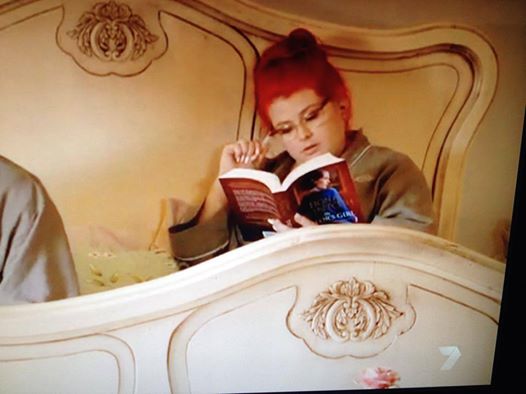
On Wednesday, Fiona McIntosh posted this photo to her Facebook page:

Fiona Macintosh the Tailor's GirlIn case it’s not immediately obvious, it’s a character called Jenny from an Australian TV show, Winners and Losers, reading one of Fiona’s latest books, The Tailor’s Girl. 

Everyone who writes knows about the dream of sitting next to someone on a plane who’s reading your book. Well, I reckon this is a step up.

I now have a new castle-in-the-air writing goal.


Aurealis #74: out now!

Aurealis #74 is now available, and includes my new story, Music for an Ivory Violin.

aurealis_74_cover_180_pixels_wide

Here’s what they have to say about this issue:

In this issue we feature Imogen Cassidy’s ‘Soul Partner’, an urban fantasy gumshoe pastiche with some original touches, and Leife Shallcross’ creepy and engrossing ‘Music for an Ivory Violin’. Chris Large brings some thoughtful silliness with his ‘When a Jedi Should Think Twice About Bringing a Knife to a Gunfight’, and Stephen Higgins continues his SF’s Sacred Cows with Asimov’s Foundation.

I hope you enjoy it!

Getting edits

I love getting edits. It’s like having someone else brush my hair.

I love having to focus on a word or a sentence or a paragraph and really think about what I wanted it to do. What is the meaning I want it to convey? What is the feeling I want it to build? Which other bit of the story do I want it to point to? Which pieces of information do I want it to connect?

Of course I try and do that anyway, when I edit my own work. But there’s something about having someone sift through your writing and point out a fumble or a piece of fuzziness that is like having a skilled masseuse find out a bothersome knot in your shoulder and work it away.