Unpicking the seems

260 pages in to a final polish edit before sending novel project #1 out into the big wide world, and I have already removed 63 instances of variations of the word “seems”. Seemingly, I seem to use it a lot, it seems.

Ugh, the shame.

*Update: from 552 pages & 118,000 words, I deleted 152 instances of variations of the word ‘seems’. I had no idea. An example, if ever there was one, of the value of beta readers. Thank you Jane Ainslie.

Gems of wisdom from the Conflux Writers Day 2014

On Saturday I attended the inaugural Conflux Writers Day, a professional development day targeted at spec fic writers leading up to the Aurealis Awards ceremony that evening. It was such an overwhelming overload of amazing information, I had to go into my writer’s cave for a while to think about it all.

The lineup of panellists was outstanding, and the plenary speakers particularly so. I took some gem of knowledge away from every session I attended, whether it was a new revelation, or a different perspective on an old truth. Here’s a selection of my faves:

Joanne Anderton (on creating stories from weird ideas): What if…? So what…? Rinse. Repeat.

Kaaron Warren: Inspiration is an indulgence. Your first spark is your inspiration. The rest is hard work.

Kaaron Warren: Time to write and inspiration – don’t wait for them. Write anyway.

Laura E Goodin (on performance writing): Your job is to suggest, not to portray. Your words are only a scaffold for the genius of others.

Cat Sparks: Write about what you want to know.

Cat Sparks: Most stories are boring rather than bad.

Russell Kirkpatrick: The world you build must be relevant to the characters and the story.

Kaaron Warren: Your head is your special place.

And that last from a multi-award winning horror writer…

9837-Conflux-writers_blk-1024x530

Awesome words: dreadnought

This first referred to a 41-gun galleon in the English Navy Royal, launched in 1573 (according to Wikipedia), and has since been used to refer to a number of things, including 20th Century battleships and acoustic guitars.

Literally ‘fear nothing’.

But, somehow, this word creates its own frisson of fear.

It’s probably a combination of the fact that something that ‘fears nothing’ is going to be a pretty big, scary thing itself, and the combination of the actual words dread + nought.

I mean, ‘dread’ isn’t just fear, it’s fear levelled up some.  And ‘nought’ is a nice, tasty, archaic way of saying ‘nothing’, which gives the term a certain historical weight.

Yum.

Success! I think… Oh God..

23 Goats Who Cannot Believe They're Really Goats

This is me, yesterday, after receiving an email about a short story I subbed a few weeks ago. I didn’t respond to the email straight away, because I knew I’d say something breathless and idiotic and completely unprofessional. Instead, I went out and bought a bottle of something with bubbles, because this would be my first sale outside the token market.

When I got home, I checked out the website for the publication and saw the names of some of the other contributors. There were names on that list I recognised. I have their books on my shelves. They’ve won serious awards. I spent about 2 seconds completely flipping out.

Then came the crash. Do they really want my story? I re-checked the email. Yep. The phrase ‘loved it’ appears three times. Really?  Instead of going back into happy baby goat mode, my traitor brain started throwing up scenarios where the editors ask for changes and I completely fail to come up with the goods, instead becoming mired in an inescapable swamp of trite cliches and substandard prose. Or where they re-read it in the sober light of day and realise, actually, just…no. Instead of feeling empowered and validated, I started picturing myself as a wide-eyed, amateurish wannabe, lost in a wilderness of unrealistic expectations and about to walk unsuspectingly over the precipice of crushing disappointment.

And I think that’s the thing. The disappointment of a standard rejection letter is one thing to deal with. Every writer pretty much steels themselves for that each and every time they send out a story or a query letter. But to be rejected from something like this opportunity, after having success dangled so tantalisingly in front of me… That would be disappointment levelled up some.

We’re writers. We have big imaginations. We gird our loins against rejection, but we can’t help ourselves imagining the success. I saw the names on the contributors list, and for a small, flashing moment, I saw my name in a TOC alongside them. Then my imagination did a total reverse, and started constructing a scenario where I wind up looking at an email saying “We appreciate all your effort, but we’ve decided it’s not going to work out.” After I’ve invested all this energy imagining that awesome TOC.

So I’m giving myself a stern pep-talk. They loved my story. That’s a good thing. They want it for this project, alongside a bunch of certified, genuine, awesome authors. They think it will stand up OK against their work. That’s a good  thing. And if, for some reason, it doesn’t work out? That’s actually OK too, because I will still have a solid story I can sub elsewhere. And let’s face it, when I subbed this one, I’d pretty much set my top expectation (wild imaginings aside) at maybe a nice rejection saying, “Not this time, but we’d like to see more.”

Deep breath. I can do this. Time to release my inner super-happy baby goat.

Making up words

Want made up words? Lewis Carroll got made up words!

In 2011, when I decided to ‘get serious’ about my writing, one of the first things I did was book myself into a Year of the Novel course with the very knowledgeable and generous Craig Cormick, through the ACT Writers Centre. One of the very first exercises he got us to do, was describe our favourite kitchen appliance in one sentence, without mentioning what it is. I came up with:

When it’s packed, the mess is gone, and I can go and write.

(Can you guess?) Then, of course, we had to condense it down to one word. One word? The man is crazy, I thought. Then he uttered the magic phrase… “If there isn’t a word, you can make one up.” (Or something like that.) Awesome. It came to me almost straight away.

Squared-awayness.

Now, I could have gone with ‘neat’ or ‘clean’ or something like that . But none of those words conveyed the sense of satisfaction I have at achieving a kitchen that doesn’t have dirty plates and used saucepans scattered over every surface. For some reason, if my kitchen is messy, I feel like my mind is cluttered. Words like ‘tidy’ give you a sense of the end product, but they don’t describe the journey. My word conveys (to me, anyway) a sense of my active participation in achieving that state. And there’s the rub.

If you’re going to go making up words, you run the risk of creating something that’s meaningless to other people.

Words like ‘squared-awayness’ probably don’t carry that kind of risk, because I’ve picked something that already carries meaning and just levered it into a grammatical convention that makes it one word instead of two. But, especially if you write speculative fiction like me, which often involves making up worlds and cultures, you might want to make up new words, just coz they sound cool, or there isn’t quite the right word to convey what you want. In this case, you’re going to have to rely heavily on context to get across your meaning, or you can leverage off existing words that sound similar. ‘Frack’ as a pseudo-swear word is a good example of this, although thanks to the Australian coal-seam gas mining industry, that word now has a boring and slightly depressing, well-understood technical meaning.

So there’s your second risk. You might end up with a word that means something different to other people, to what it means to you. Here’s a couple of examples from one of my works in progress. This has a late-medieval-ish setting and a lot of the characters are peasants, or common household or forest-dwelling fairies loosely based on various bits of British folklore. I’ve tried to create a kind of vernacular for the story to give it a certain feel. But, here are two of the inadvertent missteps I’ve made along the way.

Lumpen

What I meant: a variant of lumpy, but with a more colloquial sound to it.

What it actually means:  (according to Dictionary.com) of or pertaining to disenfranchised and uprooted individuals or groups, especially those that have lost status. It can also mean stupid or unthinking (how’s that for irony?) and comes from the German word for vagabond.

Welkin

What I meant: something daft or stupid. I totally made this up. I just liked the sound. I think I derived it from whelk, which is a hilarious-sounding shellfish. (I don’t think you get whelks in forests, though.)

What it actually means: the sky. From the Old English welcn and related to the German word Wolke, which means cloud. Who knew?

Well, one of my sharp-eyed, German-speaking beta readers, that’s who.

Obviously, I should have done a bit more due-diligence. I remember reading about J K Rowling Googling the term ‘Horcrux’ when writing the 6th Harry Potter book.  (Now there’s a woman who’s great with made-up words.) She says she was so relieved to find no Google matches on it at the time, because she really liked the word and desperately wanted to use it. (Try Googling it now!)

So the moral of this story is: be creative! Make words up. But you might want to double check to make sure you’re using something that, well, means what you think it means.

The motivations of ghosts

Recently, I wrote a ghost story. I sent it off to some writerly friends for feedback, every single one of whom came back to me saying, ‘Well, from this point on it was clear it was going to end in ghostly revenge.’ Which, obviously, was a bit of a problem I had to address in the rewrite (hopefully I have). However, it also led me to thinking on the motivations of ghosts. My initial reaction to the feedback (apart from Argh, how do I fix this?) was, well, what else do ghosts want?
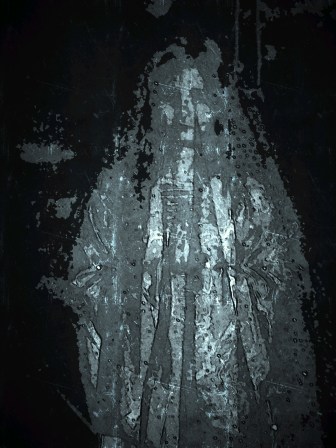
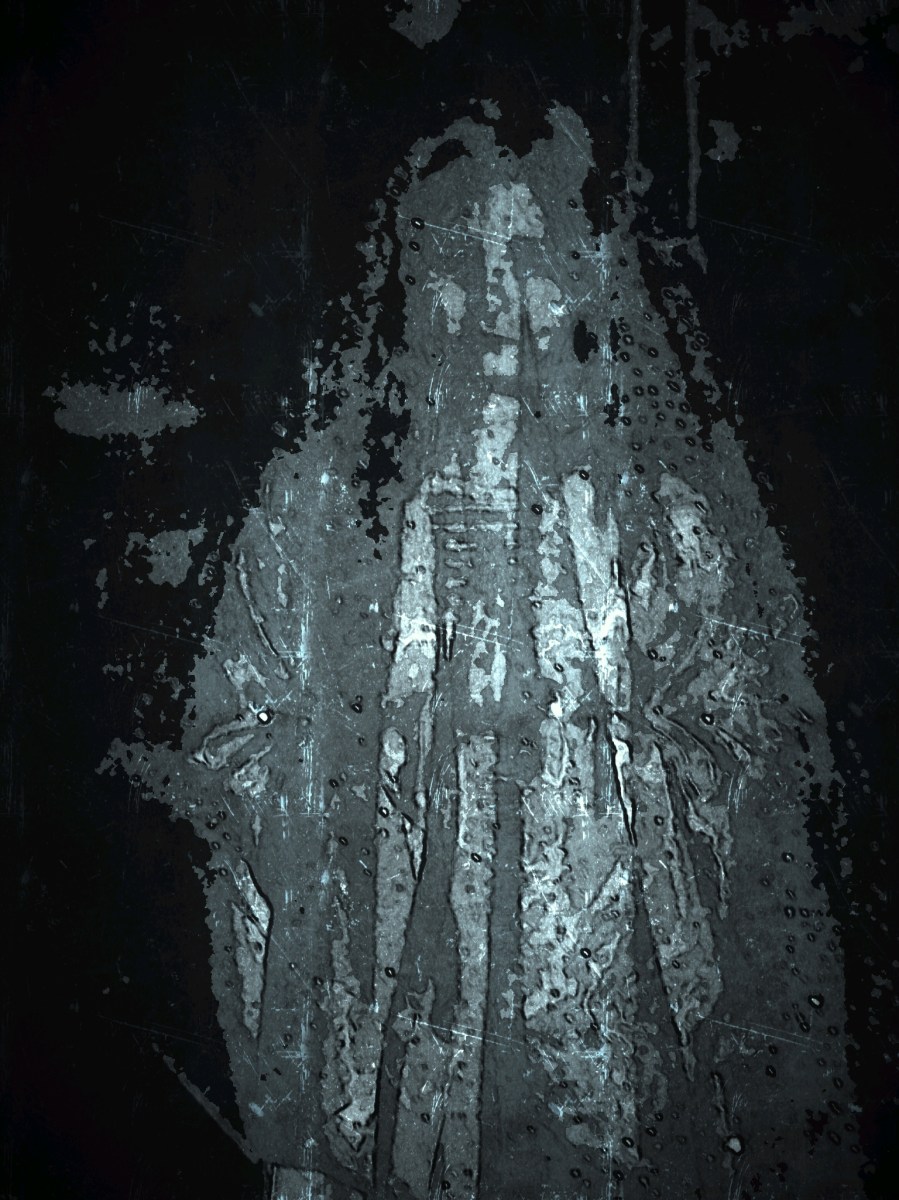
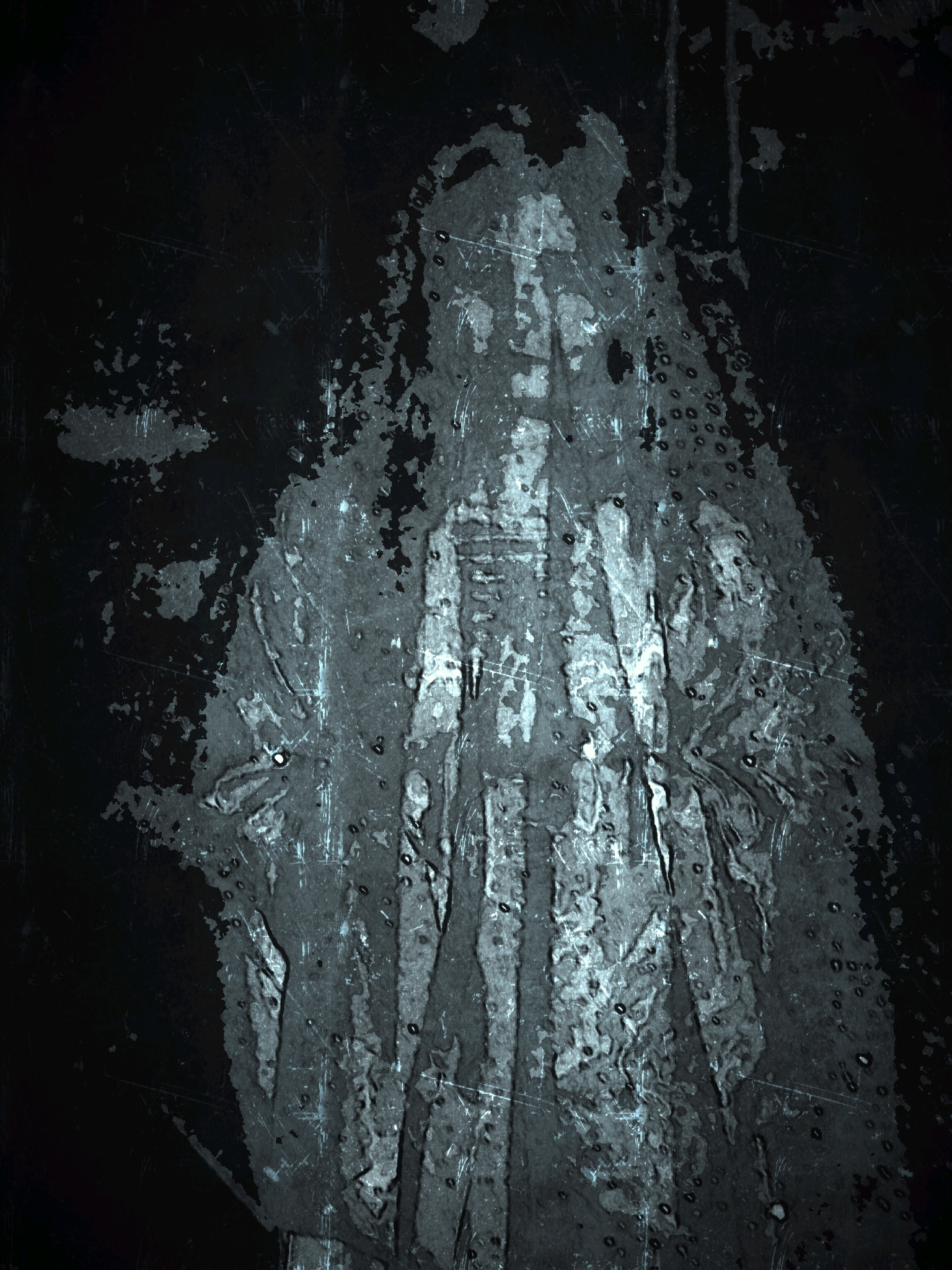
Ghostie 8

After thinking about it for a while, I decided it could be any number of things, actually. Thinking over the ghost stories I remember, it seemed to come down to the reason why the ghost was…well, a ghost. So, in the interests of adding a bit of diversity to my characters next time I attempt a ghost story, here are the things that I came up with that might reasonably motivate a ghost.

1. Revenge

Due to something to do with the manner of the person’s death, their ghost is now seeking revenge. Outright murder is an obvious one, but perhaps their persecutor made them miserable and drove them to suicide, or framed them for a crime that carried a sentence of death, or was somehow negligent, with fatal results.

One of my favourite ghostly revenge stories is that of Pearlin Jeanne, who haunted her faithless lover’s stately home at Allanbank in Scotland. She was killed in Paris when she tried to prevent her Scottish lover leaving her by climbing onto the wheel of the coach he was absconding in. He ordered the coachman to ‘Drive on!’ She fell and her head was crushed under the wheel. Her dying threat was that she would always come between her lover and any woman he married. From that day, Allanbank was troubled by the apparition of a young woman in a bloodied pearlin lace veil…until someone came up with the ingenious solution of hanging a picture of her between the portraits of the baronet and his wife.

2. Justice

This is possibly another version of ‘Revenge’. I suspect that the vengeful ghosts are likely to be the ones that wouldn’t normally have recourse to any other avenue of justice. So the justice-seeking ghosts must have a level of confidence in some sort of earthly authority to deliver retribution for them.

3. Closure

The timing or manner of the ghost’s death left something important undone. Something the ghost is determined to complete. There are some great stories about ghosts who knew something, but never communicated it to the person who needed to know it in life, so come back just for this purpose. Often it’s the location of the family fortune or some other treasure. But, then there are tales like Joan Aiken’s ‘The Ghostly Governess’ from All but a few (one of my all-time favourite childhood reads), in which a rather sweet, if slightly autocratic, governess is unable to rest until she is satisfied that she has taught her students the things they are supposed to know.

4. Warning

The ghost is compelled to return either to warn someone about something similar to what happened to them, or to save a loved one or descendant in peril. Like the young woman whose death somehow resulted from her giving in to the amorous advances of a local rake. Her ghost then developed the disconcerting habit of appearing before other maidens who were on the point of making the same mistake. I really hope, for equity’s sake, that she made some effort to haunt the guy who caused her death, but I don’t remember that being part of the story.

5. To fulfill a promise

This is an interesting one. It could be the ghost’s determination to make good on their word that has kept them around. But, it could also conceivably be the power of the promise itself that has called them back.

6. Can’t let go

There’s probably a few reasons here that fit under the category of ‘can’t let go’, but sometimes there’s no other reason, other than life is good, death is unknown, so why not hang onto what semblance of life you can, while you can? Or maybe they’re just so enraged at the thought of having died, they’d rather share the misery by hanging around and venting their anger on the living. Or, maybe, there is something, some person or object, that their affections and energies were so bound up in, that they just can’t bear to leave it and move on. Like this fantastic story from Yorkshire in the UK about a young woman who died just  as her family’s grand, new, stately home was nearing completion. Distraught that she would never see it finished, she made her grieving family promise to cut off her head and keep it in the house so that she might watch over it. When they buried her (whole) in the churchyard, the house was beset by all manner of ghostly annoyances until they relented and finally brought her head inside (ew!)

Then, of course, there are the ones that don’t seem to realise that they are ghosts, so they don’t know that they have to let go.

7.  They’ve been called

There are plenty of stories of people who have passed on perfectly peacefully, yet are disturbed in their rest by thoughtless individuals who seek to reawaken them for their own purposes. If you’re going to go around raising happily slumbering spirits, the consequences are on your own head.

8. They’ve lost their way

I suppose this is centred on the idea that there is some sort of journey for the ‘soul’ to make after death to whatever place it is that souls go, and some of those souls get distracted or lost en route.

9. They know where they’re headed, and they don’t want to go

There are also stories of ghosts who know exactly what’s in store for them after death, so they do what they can to avoid that well-deserved fate. Like the blackguard lord who died unrepentant, and whose unquiet spirit then went and stuck his head through the stained glass window of the local church in order to thwart the devil’s attempts to collect his blackened soul, on the basis that once he was on hallowed ground, the old goat couldn’t touch him.

10. Psychic shock

Perhaps the manner of the person’s death was so sudden, or shocking, or violent, or tragic, that it caused some kind of psychic shock. These are the kinds of ghosts who don’t seem to have any attention to spare for the world of the living; they’re simply too caught up in endlessly reliving their own last moments.

I once read an account of a place in Britain that was supposedly haunted by a legion of ghostly Roman soldiers, who would march through a basement over the ancient remains of a Roman road. I always wondered why it would be the whole lot of them at once. Maybe they were off to some battle that went badly for them, and this was some sad remnant of their final march.

So there you go. There’s a bunch of motivations for ghostly characters that I’ve come up with. What do you reckon? What have I missed?


How lazy writers are endangering the human race

Here’s me, moonlighting with a guest post over on Alan Baxter’s blog about lazy character development and sexism in animated kids’ movies.

Alan is a writer of dark spec fic and horror, including two novels, Realmshift and Magesign, as well as the extraordinarily useful writers’ resource Write the fight right (he’s a kung-fu instructor, too.) He’s got enough accolades and short stories published to give anyone an inferiority complex, so when he asked me to write up an email rant into a guest post, I was too scared to say no.

Just jokes. But it did give me the opportunity to have a whinge about something that has bothered me for years, especially when my 10 year old daughter asked me last year why there weren’t any cool movies about girls. (I think by ‘cool’ she meant ‘with fighting in’.)

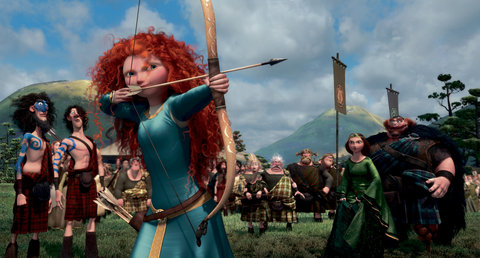
I admit, I was so incensed by Pixar trumpeting the fact that they’d finally (after 17 years) made a movie with a–gasp!–girl in the lead role, I was all set to be completely exasperated by Brave. 

A girl and her mum
A girl and her mum…and a squillion highland warriors

But I wasn’t.

loved it.

Still, an evening’s worth of research using Wikipedia revealed that I was not imagining it…if the sex ratio of the human race (OK, lets go with the idea that action figures, toy dinosaurs, rats, mythical entities and monsters of all descriptions constitute, at least temporarily, citizens of the human race) was anywhere near what it appears to be on the basis of a quick census of Pixar & Dreamworks’ characters…we don’t need to be worried about global warming, folks. We’re well on our way to extinction.

And after two posts and a guest post in one week, I need a Bex and a lie down.

7 line challenge

Toadstool
Toadstool

So, my good friend Chris Andrews has tagged me in the 7 line challenge.

The 7 line challenge goes like this: you go to page 7 (or page 77, just to give you a bit of choice) of your manuscript, go down 7 lines, then put the next 7 lines of text onto your blog. You then tag 7 people to do the same (I expect that might be a challenge…)

My 7 line challenge teaser comes from the manuscript I’m currently finishing off, with a working title of ‘Jack’. See if you can guess why.

‘I name you Jack,’ she whispers, and all the folk of the forest grow still and silent, lest one drop of one word escape their furred and pointed ears.

‘For all faerie hosts must have a Jack, a Jack who knows their secrets, a Jack who lives among them, a Jack who plays among them, and stays among them. A Jack whose heart is yet mortal and will never find satisfaction but from among his mortal kin. And Jack you shall be, and strong and hale and brave, all these I give you. And even more, Jack, you shall be lucky. I give you the luck of the faerie folk and may it be your best companion.’

Let’s see if I can find 7 people to tag now…

Ay up, first tag is Simon Petrie, sometime editor of Andromeda Spaceways Inflight Magazine! Wonder what he will have to offer…? Find out here.