Author & social media guru Zena Shapter is doing a series of blog posts on what music inspires authors, and today she’s profiled me! Head on over to see what I, and dozens of other authors Zena has interviewed, like to listen to, to feed our muse.


Author & social media guru Zena Shapter is doing a series of blog posts on what music inspires authors, and today she’s profiled me! Head on over to see what I, and dozens of other authors Zena has interviewed, like to listen to, to feed our muse.

Grume: an archaic word from the middle of the 16th century meaning thick, viscous fluid, especially clotted blood.
Comes from the Latin ‘grumus’, meaning lump, or hillock.
It sounds like grime, only gloomier and more unrefined.
Ugh.
I was only going to do two posts on reading. Then Elizabeth Fitzgerald asked me what makes me really want to read a book, and I conceived a third. Then I read this Huffington Post article: 20 New Classics Every Child Should Own, and a fourth popped into my head. I decided to do this one first, just because reading to my kids was first on my list of why I read books.

The Huff Post article made me sad my kids are past the age of picture books. (I consoled myself with the thought of the new list of wonderful gifts I now have to chose from for my littlest friends.) But it also made me think about why I choose the books I do to read to my kids. This list of 20 new classics was compiled by Jordan B Nielsen, a children’s book buyer for an independent book store, and reviewer of children’s fiction. She was driven to create this list as a response to her dismay over her experiences with adults who, buying books for children, eschew purchasing more recently written books for the books that they loved as a child.
Nielsen is sympathetic; she acknowledges that the choices of these adults for ‘time-worn favourites’ come from a desire to share with a child a much-loved reading experience from their own childhood. But, as she rightly points out, there are so many really wonderful new books for kids out there.
This made me think about why I choose the books I do to read to my kids. Without doubt, there is a selection in there of books I have read and loved, and that have played no small role in shaping the literary landscape in which my imagination plays. A selection of these includes:
But I am totally with Nielsen in agreeing that this is only a small selection on the vast and wonderous selection of enchanted worlds on offer for children thesedays. Some stories that were not around when I was 12, but which we have dived into gleefully (I invite you to imagine the howls of protest when I close the book and insist they go clean their teeth after I have read myself hoarse over the course of three chapters in an evening):
Which brings me to the one guiding principle I have in selecting books to read my kids. I don’t so much want to share with them the experience of reading a specific book, as the experience of being completely transported by a wonderful story. The clues I look for? An intriguing title, a beguiling concept, fascinating characters, a world that makes me want to get dinner over and done with so we can pile onto my son’s bed and sink together into the pages.

My 12 year old daughter just finished reading the Infernal Devices series by Cassandra Clare – books I have not read (yet). She came out of her room yesterday, and curled up next to me on the couch with a sad little look on her face. She snuggled up against me and said forlornly “I’m going to miss them.”
She was talking about the characters in the story. And that makes me feel like I’ve done it. I’ve shared enough of my own reading experiences with her, and we’ve shared enough new ones together, that I’ve succeeded in instilling in her the love of reading and story that is so precious to me. Now she can go off and have her own experiences that will enable her to shape a unique landscape of imagination of her own. I have given her that gift.
Score.
Palimpsest: a page of writing, particularly on parchment, that has been erased or scraped clean to allow for new writing.

This is another one of those words that is a whole story unto itself. What did the original writing say? Why was it erased? What was so important about the new writing that the old had to make way?
Palimpsest comes from the Ancient Greek palimpsestos which means ‘scraped again’. Cicero, the Roman writer and orator, used it to refer to the Ancient Roman practice of writing on wax tablets, which were then smoothed out to be used again. So the term is rooted in a practice of utilitarian necessity.
Even so, I find the idea of lost or hidden knowledge that the term palimpsest implies completely beguiling.
In my last post, I talked about how being a writer has limited my capacity as a reader. But I don’t want to give the impression that I don’t read any more. Far from it. I just find I have to be a lot more selective these days.

So what do I read and how do I prioritise? Well, here are some thoughts. In terms of priority, it’s roughly in order, but subject to change on the basis of necessity or whim.
1. I still read to my kids. I’ve put this first, because it happens almost every day, so it probably makes up the bulk of my fiction reading, even though it’s not technically for me. They’re 12 & 10 now, but they love being read to. Right now we’re reading Joan Aiken’s All But a Few. But we’ve worked our way through plenty of fabulous books. This is pure, unadulterated fun.
2. Books I really, really want to read. These are the ones that furnish the landscape of my imagination. These books have built the pantheon that I want to be a part of as a writer. They feed my muse and inspire me.
3. Books I want to read because they’re going to help me improve my craft. They might be beautifully written, or have an intriguing story premise, or won an award, or have caught the zeitgeist, or be somehow relevant to my own work.
4. Beta reading for friends. It might not be for leisure, but it’s reading fiction written by someone else and it certainly helps my own craft.
5. Non-fiction reading, usually for research, but sometimes for fun. Hell, the best research is fun.
6. Catching up on published work by friends. This is basically an impossible task now. But I do what I can.
And that’s it. That’s all I can fit in.
What I find interesting, now I’ve put that list together, is how all of it ties back, somehow, to supporting my own writing. It might just (just! *rolls eyes*) be reigniting my passion for stories and beautiful words, or it might be something more concrete, like learning more about a historical period, or how to construct a murder mystery. But I can’t not read without that writer part of my brain ticking over, hoarding the good stuff and putting squiggly red lines under the bad.
Which tells me, ultimately, that time spent reading is time well spent. Even though – or perhaps because – it’s rarer and more precious than it used to be.
I’ve had quite a literary week. On Monday I went to see the entertaining and debonair Joe Abercrombie talking about his new book, Half the World, at Harry Hartog’s (and what a beautiful Canberra bookshop that is.) I had the opportunity to chat to him before and after his talk; beforehand I quizzed him about the sex scenes he writes (!!!) and after the crowds had drifted off my CSFG buddies and I had a chance to chat to him about a bunch of things including the fantastic covers on his books.

Then on Wednesday, we had our first general meeting of the CSFG for 2015, which my good friend Kimberly Gaal and I kicked off with a session on goal setting for writers.
How are these two things linked? Well, one question Joe was asked on Monday night was what is he reading now? His initial answer to this was interesting: he said “I don’t read anymore.”
I found this interesting because a quick Google search will throw back at you plenty of quotes from high profile writers telling aspiring authors that the one thing they must do is read. But even so, this is not the first time I’ve heard a high-profile author say they just don’t read anymore.
Joe then went on to demonstrate that, actually, he does read (of course). But when he talked about reading, it was very clear that it’s not something he does for leisure these days. He reads a lot of non-fiction for research, and he indicated the fiction he reads now is mostly in genres other than what he writes (dark fantasy).
At our CSFG meeting on Monday, one of the things we talked about in relation to goal-setting, was doing a reading challenge as a useful way to expand our horizons, connect with readers, understand markets and feed the muse. (Here’s a great post from Elizabeth Fitzgerald over at Earl Grey Editing about reading challenges.)
This all got me thinking about what and why I read. I absolutely do not read anywhere near as much as I used to. I have no hesitation in saying it is one of life’s great pleasures. I was an inveterate bookworm as a child. I read Charlotte’s Web when I was six. I started reading the likes of Anne McCaffrey and Tanith Lee when I was about thirteen. I read and read and then I reread and reread again. In University, I wrangled my degree so that it was about 85% English Literature subjects. This meant I (was supposed to) read something in the order of thirty to forty books a year. I can’t say hand-on-heart that I did read that many, but I read most.
But now…
I find reading uses a similar part of my brain as writing. It also scratches a similar itch and fills in the same few spare hours. So for me, it’s often a choice. Read or write. Still, I definitely do read. I just have to be very selective. I’m also pretty brutal now about finishing books. If it’s not doing what I want it to do for me, I stop reading it. I do not have time to persevere with duds. I set aside one massively popular bestseller just recently because I could not stand either of the two main characters and I did not want to spend another minute in their company. If I decide I want to know how it ends (I’m not fussed right now, I don’t want either of them to prevail), I’ll go see the movie.
Having said all that, I do still read, and it is still one of my favourite ways to spend an hour. Or three. Or eight. Like most people who love books, I have a to-read pile that in its darker, more unstable moments could kill small children if it toppled over. So in my next blog post, I’ll talk about what and why I read, and how I prioritise that growing stack beside my bed. And the one on the bookcase. And the one beside the bookcase on the floor. And –
*sound of books falling*
*muffled screams for help*

How could this have slipped my mind? My only excuse is that I’ve been crafting a new story, so my brain has been very much off in another world entirely in the last couple of weeks.
On 3 February, the Canberra Speculative Fiction Guild announced the table of contents of their upcoming anthology The Never Never Land, and my story Adventure Socks is in it!
Congratulations to everyone involved. The lineup is fantastic, and includes a bunch of authors I’m very proud to sit alongside, as well as some new names.
I have to thank my fiddle teacher, the extraordinarily gifted artist Jacqueline Bradley, for the inspiration for this one. She makes sculpture using familiar objects in quirky, unexpected and thought provoking ways. While this story is not a direct response to any specific piece of hers, the idea behind it sprang from a conversation we had and feels to me like it has perhaps captured a tiny spark of the homely, whimsical spirit of her work.
I’ve just finished the second draft of a new short story – my first for 2015. I got it done in time for the February session of my writing group’s short story critiquing circle, and they gave me some excellent and very positive feedback. Now I need to let it sit for a bit, and maybe get one more set of eyes to run over it before I start sending it out into the world to find its way.
It feels good to have a new short just about ready to go, because I’ve been focussing a lot on novel projects recently. These offer a whole other kind of gratification, but they really are the long game. It’s very easy to feel like your writing career is going nowhere while you chip away at your novel-sized wordcount, or navigate your way through the slog of trying to find an agent or a publisher. Also, just from the perspective of writing satisfaction, the great ideas you want to get down take a lot longer to realise in novel form than in short form. This one only took a few days to knock out the first draft.
Plus, even though my trunk is largely empty right now for all the right reasons, it’s not good for it to stay that way for long. It feels good to start filling it up again.
Now, usually I have a really clear recollection of where the inspiration came from for a story. Usually it’s an image. But for some reason, even though I only started writing it two weeks ago, my recollection of where this one sprang from has all got a bit muddy. I think it might have changed direction somewhere along the way, and now I can’t remember what kicked it off.
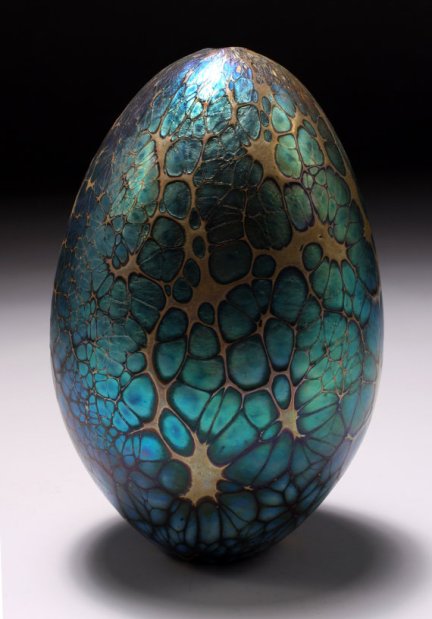
So, in lieu of my source inspiration, have a picture of some beautiful art from Jack Pine Studios. It may be relevant!
Incarnadine: the colour of blood, or to bloody or stain with red.
This word comes from the Latin incarnare, which means to ‘make flesh’. It probably originally meant ‘flesh coloured’, however its current use stems from these immortal lines from Shakespeare’s Macbeth (1605), just after Macbeth has murdered Duncan, and he begins to apprehend the horror of the act he has just committed:
Macbeth:
Will all great Neptune’s ocean wash this blood
Clean from my hand? No; this my hand will rather
The multitudinous seas incarnadine,
Making the green one red.Macbeth, Act 2, scene 2
Why do I love this word? It’s so close to so many other great words dealing with the flesh that give it a range of delicious overtones and associations. Incarnate, for example. This association gives incarnadine a truly arcane sense, as though the colour itself represents something more amorphous, and has been imbued by some supernatural agency. Nothing ever starts out incarnadine. It is a colour that something becomes through some sort of Mephistophelean act.
Then there’s, carnal, which in my mind is quite a dark word and gives incarnadine an array of darkly sensual overtones. You can’t escape the fact that flesh is at the centre of incarnadine. The word has an ineluctable physicality about it.
And, of course, that slaughterous word, carnage, which is all about violence and blood and rent flesh. Incarnadine is not a quiet, demure colour. It’s the colour of vengeance and guilt and dark, terrible acts. It’s a colour with story.
*shivers*
What a delicious word. It has such a lovely Dickensian flavour to it. It has all the magic of Christmas, plus some tasty liturgical overtones.
This word seems to have entered the English language around the beginning of the seventeenth century. The ‘tide’ part comes from the Old English word ‘tid’, which means ‘period of time’ or ‘season’.
The season of Christmastide roughly covers the traditional twelve days of Christmas period, although different Christian Churches begin and end this period on slightly different dates.
I love this word because if its archaic quality, and all the traditional elements of Christmas it conjures up. Rich plum puddings, gingerbread, robin redbreasts perched on snowy twigs, holly, mistletoe and spruce. (Note: I’m Australian. So you can appreciate the irony of all this.) But I also love it because it sounds joyful. I associate the ‘tide’ part with all the good tidings and cheer in the carols. And, I have to admit, I also like the idea of stretching out the celebration of Christmas for as long as possible.
However you celebrate Christmas, or even if you don’t and are just enjoying the public holiday, I hope you are having a safe and happy one.
 Leife Shallcross