Conflux 12 wrap up – Part II

conflux12headerrgbThis year at Conflux we decided to do something a bit different with the writing workshops and run them throughout the weekend instead of all on the first day (Friday), which is how we’ve done it previously. One thing I found is – probably due to the interactive nature of workshops – these are a really good forum to hook up with other people at the convention. I managed to get in three workshops. (Although one was in two parts and probably counts as two.)

I’d asked Alan Baxter to run a version of his Write the Fight Right workshop, mostly because I’d never done it and I really wanted to. (A perk of being in charge of programming!) It’s usually a whole day, so he did a condensed version of it over two hours. It’s great, I highly recommend it and I’d love to do the full version one day. It covers stuff like what it feels like to be punched in the face, the physiological effects of fighting (far more complex than you’d expect), how to use space and even some handy first aid advice. As you’d expect he provides plenty of anecdotes and stories from his own life experience and even pointed us at a few clips of fights to give us a sense of the difference between cinematic show and what a real fight might look like. Hint: the fight between Darcy (Colin Firth) and Cleaver (Hugh Grant) in Bridget Jones’ Diary is more realistic than you might think (quintessential smashing-through-shop-window scene notwithstanding).

BJD.jpg

I did a two part workshop conducted by Kaaron Warren and Nick Evans called Spray and Wipe. This involved a trip to the Green Shed (a store that sells recycled items donated through Canberra’s tips), where we had to choose an item from the shop as an inspiration point for a story. Kaaron then took us around to the Green Shed Underground (a separate store run by the Green Shed where they sell all their donated books and clothing) and made us choose an outfit for one of our characters and dress in it to write the story.

I decided to have a stab at generating an idea for something for my suite of colour-themed stories I want to begin work on soon, and picked out a very orange biscuit tin to start with. This got coupled with a really terrible orange mumu-style shirt and some fairly tacky orange jewellery. It was when I happened upon some great 1970s cookbooks with predominantly orange covers, however, that my story brain kicked in and an idea really came together.

After that, it was back to the con venue and in the afternoon Nick Evans, a journalist by trade, put us through a fairly brutal regime of cutting, rewriting and reworking the 400 odd words we’d got down in the morning with Kaaron. I was completely exhausted at the end of it, but I definitely have the beginning of a story and I’m pretty sure I know where this one is headed!

Finally, on Monday, I did a workshop with life coach Kenny Snable on overcoming negative thoughts to increase writing productivity. This one was great. She took us through the relationship between thoughts, behaviours and emotions and gave us a bunch of strategies to manage the negative ones, and some exercises to help identify and articulate what the actual issue is that is causing us grief.

And this is only a small selection of the smorgasbord of professional development that was on offer this year!

On endings and how to get to them

the-end1

So, to deal with my stuckness (which hasn’t yet been dealt with), my good friend and writing buddy Robert Porteous asked me how my story ended. I kinda have an idea about that, but it’s vague. Bare bones. I have the pre-ending climax all sorted and have done for a while, but the actual key story climax? Sigh. So he suggested I work on that. It seemed sensible: if I know how it ends, I’ll know what I have to get to. So I did a bit of brainstorming and created a few seeds of ideas that if I water carefully enough will produce shoots (and maybe, hopefully grow into something interesting and fulfilling).

But it’s hard.

So, as a tried and true avoidance technique, I thought “Maybe I’ll go and do some story planning work on one of my other novel WIPs and get into the story planning mood by doing something a bit fresh and different and revitalise my imagination.”

And guess what. No ending on that one. Pre-ending climax sorted. Major story climax? Vaguety-vague-vague-vague. I did a bit of a mental riffle through my other novel projects and, yep, this is something of a pattern for me.

“I wonder why this is?” I wondered. Wonderingly.

As usual, it’s all to do with emotional peaks and troughs. All these minor climaxes are (in standard 3-Act plot terms) the Darkest Hour. It’s the moment of highest and most drawn out emotional tension in the story. Think the death of Obi-Wan Kenobi; Rapunzel thinking Eugene has chosen the looted crown over her; Henri telling Danielle she’s a fraud and publicly withdrawing his heart; Elizabeth Bennet confessing to Mr Darcy that her youngest sister has eloped with the villain that almost ruined his sister’s life.

If you think about most of these story examples, the Darkest Hour packs a whole lot more emotional punch than the final climax. It’s when the protagonist has lost everything – or the thing that means most to them – and it almost doesn’t matter what else happens to them at that point because their heart has been ripped in two and everything else is trivial.

The exception out of these four (all faves of mine) is Tangled. Much as it hurts to see poor Rapunzel watching Eugene sail off with the crown, it is nothing, nothing, to the blubbering mess I become at the actual climax of the film when he does what he does – not to save her, because he can’t do that at that point – but to stop her giving up on saving herself. *Deep shuddery breath*

And therein lies the lesson. If I’m going to get interested in this part of the story and motivate myself to write it, somehow I’ve got to find a way to make my ending deliver as much, or more, emotional punch as the Darkest Hour.

Simple. Right?

Right.

Never Never Land – now in ebook!

promotionalnevernever
The Never Never Land

Hooray! The Never Never Land is out today in ebook! To celebrate, there’s a Goodreads giveaway happening if you fancy winning a hardcopy version. (There’s one for Australia and one for the US, UK & Canada.)

There’s also been a series of blog posts over on the CSFG’s website interviewing some of the authors who contributed to NNL – the most recent of which is the awesomely talented Shauna O’Meara, who is not only a contributing author, but also created the cover and internal art for NNL. She’s also done a new illustration for her story, especially for the CSFG blog – have a look, it is stunning.


The Never Never Land – ebook coming soon!

promotionalnevernever
The Never Never Land

Well, here is some exciting news! The Never Never Land anthology, containing my story “Adventure Socks”, is due out in ebook on 1 July!

To celebrate, CSFG are hosting some interviews with authors from the anthology.The first one up is Thoraiya Dyer, whose debut novel Crossroads of Canopy, set in a giant rainforest, is due out from Tor in January 2017.

Writing minds-eye candy

Today has been a good day. Today I have been working on a couple of scenes in my WIP involving a handsome 18th century man in various states of deshabille. It’s always important to get the details right, so here are a few helpful images I’ve been using for research and inspiration.

Firstly, you’ve got to get the clothes right. That gap at the neck of the shirt is very important. (We’ll get to what’s under it in a minute.)

Then you have to ensure you understand just how it sits. How far down does that gap go? Exactly what can you see? Some images are more helpful than others. Some are just pure distraction. *fans self*

From there, I’m afraid, we move straight to the pics of Aidan Turner and Sam Heughan shirtless. Because getting anatomy right is important. It is.


Autumn morning

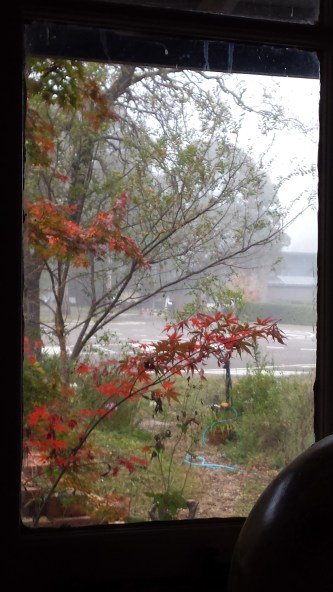
Here’s the view from my study window this morning.

2016-05-18 07.39.03

Autumn had a late start in Canberra this year, but it’s here now. We haven’t had a whole lot of fog yet, but clearly it’s on its way.

And, in other news, the WIP is now sitting on 81,000 words! And I’ve kicked a couple of important plot milestones over the goal line, so whichever way I count it, I’m making progress. Also, because I’m starting to get glimpses of the light at the end of the tunnel, I’ve started planning a new suite of short stories to get into once I’m done with the first draft of this manuscript.

Onwards and upwards. Or something.

Things that make you go “Hmm…”

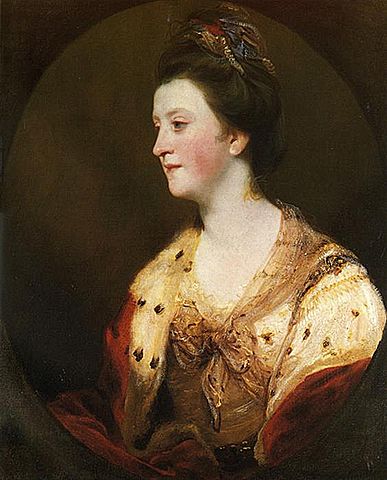
I’ve been doing a bit of trawling through Wikipedia today, building up a list of historical personages to use as extras in my current WIP. And I came across this lady:

387px-Emily_Duchess_of_Leinster_1770_s
The Duchess of Leinster as painted by Sir Joshua Reynolds in the 1770s;  courtesy of Wikipedia

Emily Lennox was (according to Wikipedia) married to James Fitzgerald, the Earl of Kildare (and later Duke of Leinster), in 1747, when she was “almost 16”. That is, when she was FIFTEEN.

Apparently the marriage was a happy one.

Well, good. Because the couple had 18 children. That was not a typo. Here, I’ll write it out, just to make sure: eighteen.

Actually, there were 19 children “of the marriage”, but the last kid, born in 1773 was actually the son of the tutor of the Fitzgerald brood, one Mr William Ogilvie. When James Fitzgerald died, in November of 1773, Emily married Ogilvie the following year (which, understandably caused something of a sensation.)

She then went on to have THREE MORE CHILDREN with her new husband!

So that’s a total of 22 children. In an age where childbirth was absolutely a matter of life and death for the mother. No antibiotics. No blood transfusions. No safe surgical procedures. No anaesthetic.

Wow.

Sadly, and predictably, twelve of her children predeceased her. Of those, nine died by the age of 10. Her eldest child, George, died when he was 17 and two others died in adulthood.

Just one other interesting thing I noted concerning the difficulties posed by such an enormous amount of offspring: obviously finding suitable names posed a challenge. She had two daughters named Louisa, two named Charlotte and two named Caroline, as well as two sons called George (ironically, George and George were her eldest children by each of her two husbands.)