Beilby’s Ball

For anyone writing about or interested in Britain in the 18th and early 19th century, the 1811 Dictionary of the Vulgar Tongue: a dictionary of buckish slang, university wit and pickpocket eloquence, brought to you by Project Gutenberg, is an indispensable resource.

Here’s a little gem I came across today:

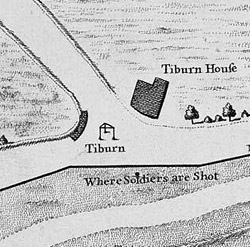
BEILBY’S BALL. He will dance at Beilby’s ball, where the sheriff pays the music; he will be hanged. Who Mr. Beilby was, or why that ceremony was so called, remains with the quadrature of the circle, the discovery of the philosopher’s stone, and divers other desiderata yet undiscovered.

Tyburn_gallows_1746

Map of Tyburn gallows and immediate surroundings, from John Rocque’s map of London, Westminster and Southwark (1746), courtesy of Wikipedia.


How little girls deal with monsters

In celebration of the release of Strange Little Girls from Belladonna Publishing, I’ve put together a board on Pinterest with images I found useful in creating my story, “Pretty Jennie Greenteeth”. I have these boards for quite a few of my works-in-progress, but I usually keep them secret. This is the first one I’ve released. Click on the link below to head over to Pinterest to have a look.

Follow Leife’s board Pretty Jennie Greenteeth on Pinterest.

Pieris rapae
Pieris rapae (Johann Fournier)


All the Strange Little Girls

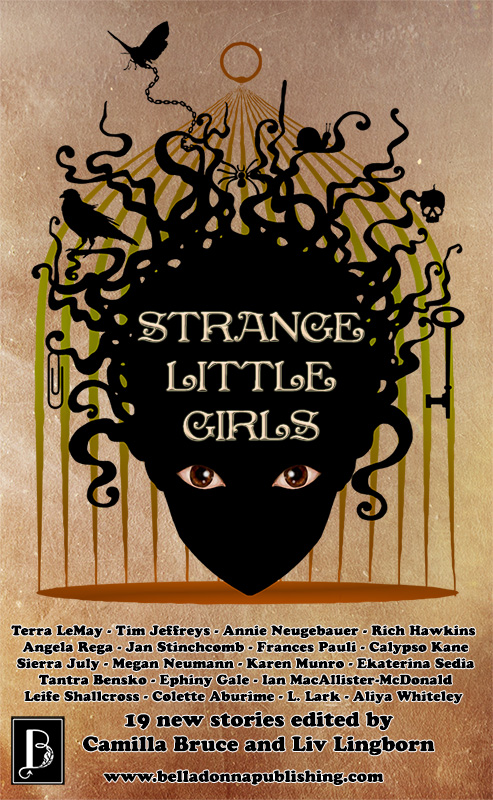
SLG-promo-cover2

I’m late, I’m late, for a very important date!

Hooray! As of 4 days ago Strange Little Girls is a real, live book you can hold in your hands (or on your kindle) and read and marvel over! For a little taste of exactly what is inside this treasure box of an anthology, head over to Belladonna Publishing for a delicious teaser of each of the stories.

I’m so in love with the cover art of this book, and the interior art is just as sumptuous. If you pick up a copy, I’d love to know what you think!

Something Strange

Belladonna Publishing have just announced the release date for Strange Little Girls: 14 March! It contains my story “Pretty Jennie Greenteeth”, which explores the perils of underestimating both middle sisters and stories told to scare children.

Here’s what editors Camilla Bruce and Liv Lingborn have to say about the anthology:

strangelittlegirls-200x300
Strange Little Girls

Strange Little Girls are made of sugar and spice, and something not quite as nice…
The strange little girls are orphans and changelings, suburban princesses, housewives, nuns and monsters. They are quirky and sweet, terrifying and heartbreaking. All of them a little lost, brimming with their own uniqueness.
In this strange little book of nineteen tales, Lotte goes swimming with her new fishy friends, Rin is freshly dug up, D’arcy strikes a bargain with the midnight mailman and Adelaide enters the mysterious House of Infinite Diversions. Our girls must fasten their bonnets and straighten their skirts to battle otherworldly dangers and challenging circumstances, internal struggles and doubts – and maybe find out who they really are.

Strange Little Girls is now available for pre-order from Amazon if you are quick!

Note to self…

…Next time you’re having trouble getting the story flowing, Leife, stop and have a think about how you can make that particular plot point have emotional consequences for your characters.

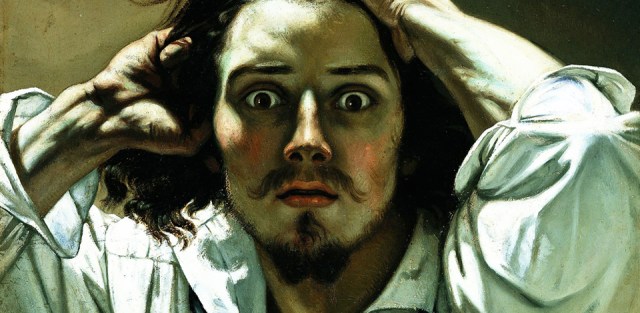
Gustave-Courbet-The-Desperate-Man
The desperate man, Gustave Courbet, 1845

I’m amazed at how often I forget basic pieces of writing advice. Then when I remember a thing I’ve known for years (usually when I’m in the shower), it’s an epiphany.

I’ve been struggling to move my current WIP along for the last couple of weeks. It’s been a bit puzzling. I’ve got that bit of plot all mapped out. I know what’s supposed to happen. But, somehow, I just haven’t managed to bring it to life.

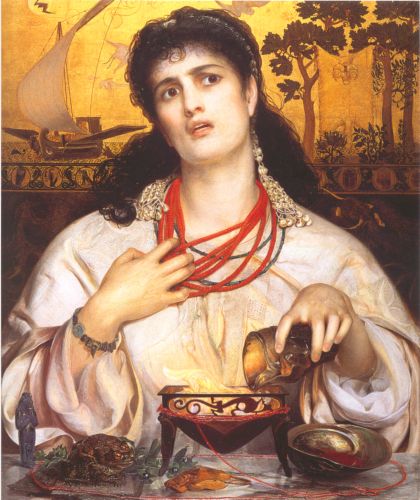
sandys-medea
Medea, Frederick Sandys, 1868

I’d put it down to the depressing necessity of returning to work after holidays, tiredness, general malaise, burnout from having gone hammer-and-tongs at the manuscript in the two months leading up to Christmas. I couldn’t figure it out.

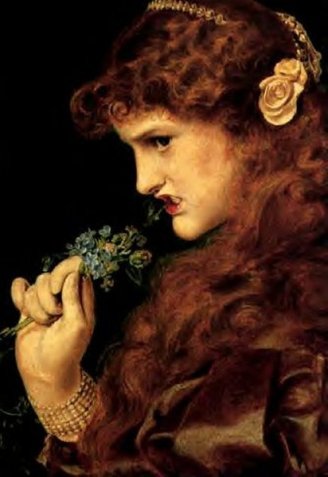
loves-shadow1
Miss Clive “In Love’s Shadow” or Proud Maisie, by Frederick Sandys, 1867

Then, in the shower today (of course), I worked it out. I had a plot point. I had a thing that had to happen to move the story along, but it was entirely mechanical and bereft of any emotional impact on my characters. I just had to spend a few minutes thinking about how I could use the scene to mess up my characters some more add an element of emotional narrative to the scene and Voila! It came alive.

Somewhere along the way I’ve picked up the term “emotional stepping stones”. This idea resonates strongly with me and how I like to write. I can plot out a sequence of events for my story, but what brings it to life in my mind and gets my creative juices flowing is the emotional touchstones of a character’s arc. Every time I think about a candy bar scene that I had to get up in the middle of the night to write, it’s a scene involving some kind of emotional high (or low) for my character.

So that’s my note to myself. To remember that my story isn’t just a sequence of events, but a series of emotional stepping-stones, and that, actually, is what keeps me interested.

So glad I sorted that out. Now have some more Pre-Raphaelite pictures of beautiful people having emotions.

JoanofArcdetail_Rosetti
Joan of Arc, Dante Gabriel Rosetti, 1882
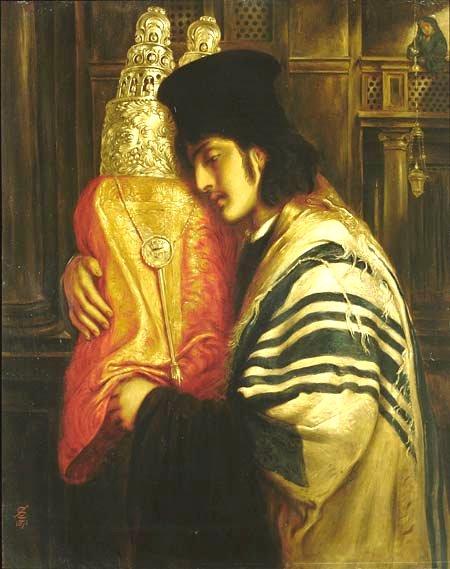
Simeon Solomon
Young Rabbi Holding the Torah, Simeon Solomon, 1871

Down the research rabbit hole

This year I have made a concerted effort to concentrate on Novel Project #4. It’s not the 4th novel I’ve started writing (lost count on that score), or the 4th one I will actually complete a finished draft of. It’s the 4th one I’ve put a serious and concerted effort into creating. Basically, a project gets a number when I feel like it’s a going concern. Otherwise it’s just fiddling around.

Novel Project #4, however, is the first one that I have spent a serious amount of time planning, and some very serious time researching. By natural inclination, I’m an inveterate pantser, but (for me, anyway) an approach based solely on flying by the seat of my pants is not conducive to getting novels written in a professional time frame.

For the last two months I have had a heavy focus on doing the actual writing part. This has been by turns intense, exhausting, exhilarating and frustrating, and it’s used up most of my word ju ju (yes, that is a Thing), which is why I’ve been so slack about blogging. I’ve done bits and pieces of writing throughout the year, but, seriously, I have spent most of this year doing planning and research.

Project #4 uses a paranormal historical setting, which means, as I mentioned, the research burden for this story has been quite high. Naturally I’m using one of my favourite periods of history, so I’ve enjoyed this immensely. But this means there is an ever-present lurking danger of being sucked down into a Research Rabbit Hole.
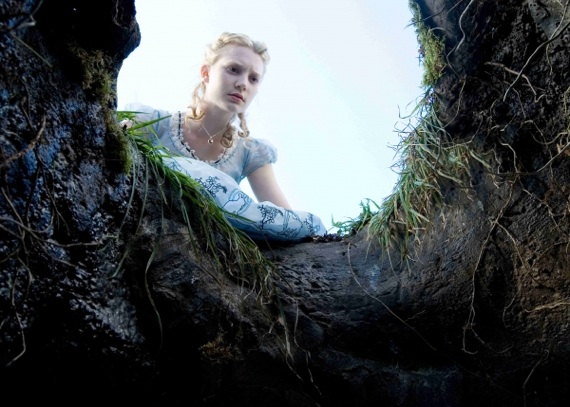
Rabbit hole

These Research Rabbit Holes can be fabulously inspirational, or horribly time wasting. They can take you in directions that are wildly irrelevant to your story, or can help you add layers of authenticity and meaning to your work. So I thought I’d share some of my favourite journeys down these Research Rabbit Holes with you. I’ve also asked some other writers about their experiences falling into these diabolical black holes of eternal fascination, and I’ll begin putting up a series of guest posts on these tomorrow.

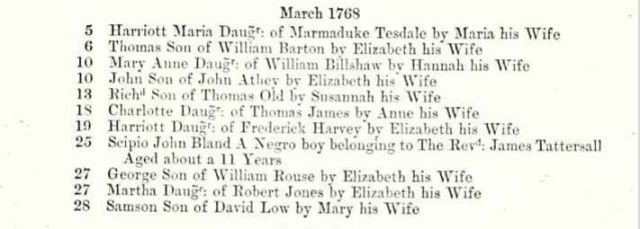
Recently, I was doing a little bit of research on a peripheral character. Primarily, I was just checking to see whether I could find out who was the Rector of St Paul’s Church Covent Garden in London in 1765, or whether I had to make someone up. I found him, one Reverend James Tattersall, and managed to glean a tiny bit of biographical information about him. But nothing substantial; nothing to suggest the kind of man he was. Then I discovered this snippet: a 1768 register of baptisms by Reverend Tattersall in St Paul’s Covent Garden.
Scipio

Right there on the 25th of March 1768, is an entry that indicates the Reverend Tattersall owned an 11 year old boy as a slave.

Rabbit Hole 1: What kind of person owns a slave? Was it an issue of status for Tattersall and his wife? Was it an act of charity? Was it unusual for people in his position to own slaves? Were they nice to him? Where they horrible?Why baptise him then? Why wasn’t he already baptised?

Rabbit Hole 2: Who was the poor kid? He was only 11! Where was his family? Were they alive? Were they even in the same country as he was by this time? Where was he from? Did he speak English? What was his life like after joining the Tattersall household? How long did he stay there? Did he learn a trade? Did he marry? Did he ever live as a free man?

Rabbit Hole 3: Interestingly, this was around about the time the conversation about the ethics of slave-ownership got started in the UK. In 1765 the grandfather of abolition in the UK, Granville Sharp, met Jonathan Strong, an escaped slave (for “escaped” read: beaten so badly by his master he was abandoned in the street as useless) and, with his brother, a doctor, helped him get the treatment he needed to recover. In 1767, Sharp provided further legal assistance to Strong, when Strong’s former master attempted to kidnap Strong and sell him to another slave-owner.

I could go on.

This, though, is a perfect example of just how far down the rabbit hole you can fall. And it’s also a perfect example of how, just from peeking through one tiny keyhole you can discover a wealth of material to help you build the world of your story.

The Never Never Land is out!

The Never Never Land

Hooray! On Sunday evening we launched The Never Never Land, containing my new story “Adventure Socks”, at Conflux 11. Nicole Murphy did the honours, noting that “Everything is better with dinosaurs”,  and that happily Never Never Land does not disappoint on this score. We had readings by Cat Sparks, from her story “Dragon Girl”, and Shauna O’Meara (who also did the amazing cover and interior artwork) from her story “To Look Upon A Dream Tiger”.

21924686576_e9cfb715ab_m
Nicole Murphy – “Everything is better with dinosaurs”
21960510951_01c7d9fce2_m
Editors Ian McHugh, Mitchell Akhurst and Phill Berrie
21924572416_9be2dd2bc1_m
Elizabeth Fitzgerald and Shauna O’Meara

I am really proud of my story in this anthology – and I’m thrilled to be sharing a table of contents with such a talented bunch. There are a swag of authors in Never Never Land with established and even award-winning careers, along with a handful of new authors for whom this is their first publication. Congratulations CSFG and everyone involved for putting out another fantastic anthology.

*All photos by Cat Sparks, used with permission.

Candy bar scenes

Image by Simon Howden, courtesy of freedigitalphotos.net
Image by Simon Howden, courtesy of FreeDigitalPhotos.net

I’ve been indulging in some candy bar scenes this week. These are typically the scenes you hold off writing, because they’re the fun ones; the ones that signify major plot points or key emotional stepping-stones for your characters. You’re supposed to hang them out in front of you like a reward you get after the rest of the wordage is down.

I find, though, these are also the scenes that help me keep a story on track. They’re the ones that set the character of the whole novel, and the touchstones I keep returning to when I feel like I’m losing my way. Getting a candy bar scene down ahead of time can help me focus on where the bit I’m actually up to in the plot is heading. They’re also the points at which my characters shine brightest – where their personalities and motivations are most clear. So they also keep me focused on how I am developing the people inhabiting my story.

Typically, these are the scenes where my Muse kicks into overdrive, so they are addictive. I tend to find they leave me a bit wrung out, though. And often when I come to incorporating them into the story as a whole (imagine a kind of literary connect-the-dots), I find they are heavy on emotion, but lacking in the kind of world-building depth that really brings a story to life. That’s fine, though. That’s what first drafts are for, after all.

For me, the key issue is balance. If I write all my candy bar scenes all at once, I just end up with a bunch of disjointed, high energy scenes that don’t actually tell a story. I confess, this was pretty much how I approached writing in my teens. I’m not sure if it was the teen thing, or an overdose of candy, but the other problem I experienced with this approach is that what I ended up with was also kind of melodramatic and silly. Also, I ran out of energy to write the bits that knitted the story together as a whole.

But if I just try to slog it out from beginning to middle to end, I get lost in the fog of the present and can’t see where I’m going, or how to get there.

I like to think of it as finding my way by following a kind of trail of candy through the forest of my unwritten draft.

Image courtesy of David Castillo Dominici at FreeDigitalPhotos.net

Research: the perils of doing it whilst tired

I’ve been concentrating a lot lately on Novel Project #4, which is set in London in the 1760s. There’s loads of reserach material to forge through, and I have to admit it is, at times, distracting.

Today I’ve been focusing on familiarising myself with 18th Century London – trying to work out what shops existed and where, what were the nice areas to live in and what were the not-so-nice, that sort of thing. Owing to this period holding an enduring fascination with readers and writers, there is a wealth of information available, which is fantastic.

You just have to make sure you’re reading it properly.

For example, the following paragraph, on a site describing the residents of Buckingham St since its establishment in the late 17th Century, gave me something of a start:

The “Lady Kilmurray” shown in the ratebooks of 1680–1 must have been an undertenant of Dearham’s. She was probably the daughter of Sir William Drury of Besthorpe, Norfolk, and the widow of Charles Needham, 4th Viscount Kilmorey, who had died in prison in 1660 for the second time.

On re-reading it, I worked out I’d missed a line, which rendered the paragraph somewhat more conventional:

The “Lady Kilmurray” shown in the ratebooks of 1680–1 must have been an undertenant of Dearham’s. She was probably the daughter of Sir William Drury of Beesthorpe, Norfolk, and the widow of Charles Needham, 4th Viscount Kilmorey, who had died in prison in 1660. Her second husband, Sir John Shaw, baronet, died in March, 1679–80, so that she was a widow for the second time.

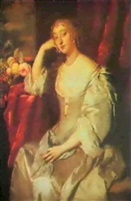
Bridget, Viscountess Kilmorey, whose first husband had sounded so very interesting.

Bridget, Viscountess Kilmorey

And here’s her second husband, Sir John Shaw.
Sir John Shaw, Baronet