Huzzah! My teeny tiny twisted fairy tale flash fic piece Bright Hair came out today on Daily Science Fiction. You should go read it. It’s free and it’s less than 200 words long!
Source: Daily Science Fiction :: Bright Hair by Leife Shallcross

Huzzah! My teeny tiny twisted fairy tale flash fic piece Bright Hair came out today on Daily Science Fiction. You should go read it. It’s free and it’s less than 200 words long!
Source: Daily Science Fiction :: Bright Hair by Leife Shallcross


Giveaway ends April 05, 2017.
See the giveaway details
at Goodreads.
This Goodreads giveaway opens today! I’ve got 5 copies for Australian readers to sign & put personalised messages in.
(If you’re not in Aus, never fear. Liv & Camilla at Belladonna tell me they have plans for you later in the year…)
HAPPY MONDAY!
No, I’m serious.
The short lists for the 2016 Aurealis Awards went up today and OMG I’M ON IT!!!
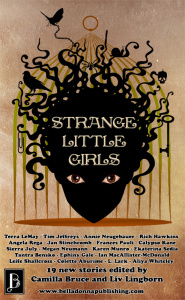
My creepy, nasty, strange little story Pretty Jennie Greenteeth from Belladonna Publishing’s Strange Little Girls has been nominated in the YA category!
And because these things are always better shared, I’ve got so many good friends on the short list with me, I’m hard put to count them all. So particular congrats to Shauna O’Meara, Dave Versace, Ian McHugh, Elizabeth Fitzgerald, Kaaron Warren, Tim Napper, Tehani Wessely, Thoraiya Dyer, Simon Petrie, Angela Slatter, Alan Baxter, Sam Murray and Lisa Hannett – and everyone else on the list!


So. That dress. *Sigh* Midnight blue and sparkling with stars like the night sky. Why did I flip out over a dress? Why that dress? Where did it come from?
I first encountered it in Sapsorrow; episode 7 of season one of Jim Henson’s The Storyteller, which starred the late, great John Hurt as the eponymous Storyteller. Sapsorrow is an adaptation of the story Catskin from the Brothers Grimm (which is part of a group of similar tales, such as Donkeyskin), in which the dress also makes an appearance. It’s a bit of a Cinderella tale, but so very much more tragic and disturbing.
Before I marry anyone I must have three dresses: one must be of gold, like the sun; another must be of shining silver, like the moon; and a third must be dazzling as the stars.
Catskin, from the Tales of the Brothers Grimm
(Based on translations from the Grimms’ Kinder und Hausmärchen by Edgar Taylor and Marian Edwardes)
That is Catskin speaking to her widowed father, the King, who has determined that he can only remarry if he finds a woman as beautiful as his dead queen. Sadly for Catskin, he determines she fits the bill. At first she tries to deter him with demands for those marvellous, impossible dresses. But when he produces them, against all her expectations, she flees, disguised in a strange and filthy robe of cat skins, from which she adopts her new name, and taking the dresses with her. Later she uses them to help her win the heart of a prince by appearing and disappearing, Cinderella style, at a grand ball.
Of the three dresses, it is the third one, “sparkling with stars” (Sapsorrow’s words), that captured my imagination. Why? Well, the simple answer is that I’ve always, always loved the night sky. That’s another thing that frequently stops my breath with its beauty.
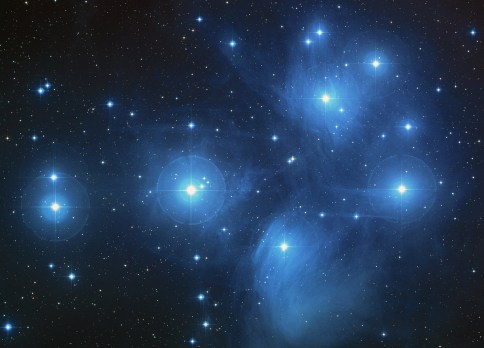
I think it might be the perfect union of fantastical and scientific beauty. I could probably write a whole other blog post, or maybe even a thesis, on exactly why. But suffice to say, for me, it simultaneously embodies both the ultimate reaches of human scientific endeavour and the very essence of magic at work. And nothing fires my imagination like these two things.
Plus, night is beautiful, but it’s also dark and uncertain. It has depth and secrets. Things, both real and imagined, walk abroad in the dark that dare not show themselves in the day. Night is interesting.
Ok. That’s the stars. But why a dress?
Clothes are hugely significant in traditional tales. People use them to adopt new identities and transform themselves all the time. It’s all a bit Clark Kent really. Princes dress up as pig-herders, cats wear boots, servant girls force their mistresses to swap clothes with them, and the rags that a little old lady is wearing might just be disguising a fairy with awesome cosmic powers. The dress, however, connotes a very particular type of transformation. For a start, it’s specifically a female transformation. I’m very much open to being corrected on this, but, while I can think of a few traditional tales that involve men being dressed in women’s clothes, and a few where men are transformed by clothes, I can’t think of any that involve a ballgown. (Fairy tales generally conform to very conservative gender norms – which is an awful lot of fun to mess around with as a writer, but that’s a whole other story.) I have a pretty strong interest in fairy tales (and other traditional tales) as women’s stories, as well, so I find this very female symbol of transformation fascinating.

That ballgown or “Cinderella” moment, where the heroine is revealed in a spectacular ballgown and is suddenly seen in a new light, is incredibly potent. So much so it has been transplanted into a bunch of other stories. Just off the top of my head, Disney has re-used it in at least two other fairy tale adaptations: in Beauty and the Beast the famous dance scene represents the first time the two titular characters acknowledge their romantic feelings (and give the viewer hope the curse will be broken), and in Sleeping Beauty, the moment when Prince Phillip, and then his father, see Aurora in her gown (which the fairies have made for her for her birthday as a symbol of her attaining womanhood), is the moment they recognise her for the princess she is. You’ll note, too, that this ballgown moment is inextricably linked with romantic fulfillment as well. Which is an incredibly enticing and satisfying story hook (even while it carries a host of problems with it).


What do I mean by problems? Well, in many ways, the whole idea of a Cinderella moment is anti-feminist. These kinds of dresses invariably centre on unrealistic and unhealthy female body types (not to mention a very narrow definition of femininity). Lily James famously had to go on some god-awful liquid diet in order to be able to fit into the dress she is twirling around in above, and even without that particular modern twist, corsets and voluminous skirts are hardly hardly the stuff of female emancipation. But… (and I am not arguing that all those arguments are invalid), dresses of this nature are simultaneously a symbol of power and status. After all, Cinderella’s dress transforms her from a drudge into a worthy partner for a prince. (It does kinda stick in my craw that her transformation is contingent on the prince finding her an attractive prospect, but we’ll come to that.)
In a pre-industrial age, clothes were expensive. Spectacular clothes were serious investments. By way of example, there was a famous scandal in 1781 when Lady Worsley left her baronet husband and fled with her lover, Captain Charles Bisset, into the night. Amidst the ensuing social fracas, her husband steadfastly refused to turn over to her the contents of her wardrobe. In Hallie Rubenhold’s book The Lady in Red on this notorious episode, she describes Lady Worsley’s collection of some twenty-four gowns, including two court dresses, and all the various hats, gloves, ruffles, muffs, aprons and a hundred other accessories, as being valued in modern terms at over £15 million. With her glamorous wardrobe at her disposal, Lady Worsley would have been able to make her way in at least some society circles and cut quite a dash, even as an object of scandal. Without it, she was little better than a pauper. So her vengeful husband hung onto it.
Another historical figure with a documented history of legendary gowns is Queen Elizabeth I. Her wardrobe was an overt statement of the power and wealth she commanded. Today those gowns, documented in royal portraits and described in awed tones in diplomatic letters, have an almost mythic status, owing to the understanding that none of them had survived. Which meant when rumours surfaced a couple of years ago that a tiny little church in Hertfordshire possessed a Tudor altar cloth that might once have been part of one of those dresses, everyone got very excited.

Such sumptuous items as the incredible gowns worn by the Tudor nobility were never just thrown out when their original owner tired of them. They were commonly handed to valued servants or repurposed into other items. It’s now believed that the Queen gave the gown pictured in the “Rainbow Portrait” to the left to one of her ladies-in-waiting, Blanche Parry, who, in turn, gave it to her parish church, where it was recycled into an altar cloth.
What I find interesting about this story is how potent this dress is as a symbol of the Queen and her power. So much so that the local stories of the little church in Hertfordshire persisted, over centuries, in the claim that the altar cloth was connected to Queen Elizabeth, even though no historical documentation remains. (You can click on the portrait to go to the article published on the Smithsonian.com in January that explains why they’re pretty sure it actually was the Queen’s. The altar cloth is now being held at Hampton Court Palace, where it will go on display once restorations are done.)
So back to Sapsorrow/Catskin and her strange wardrobe. In this story, the dresses are much more than just a mechanism to engineer an advantageous marriage. They are, in fact, a symbol of Catskin’s power to make her own decisions and direct her life. In the first instance they give her the capacity to put off the disastrous marriage to her abusive father. It’s interesting to note that in the Catskin tale there’s no fairy godmother or ghostly angelic mother to assist the heroine by producing dresses magically, either. The dresses have come into existence by Catskin’s own contrivance, and if the details on how she carries them away with her are a little hazy (in a nutshell, so goes the tale), it is she that makes the decision to break them out and deploy them in the pursuit of her prince. This is a tale of a woman who chooses what she will wear and when she will wear it. She chooses the direction she wants her life to take and she takes active steps to achieve her goals.
So there you go. That’s why the idea of this dress has stuck with me for so long. It’s a thing of beauty, with links to all the magic and wonder and romanticism that come with the fairy tale transformation it symbolises. But it’s not just a pretty thing, and it’s not just about being pretty. The night sky dress of my imagination also speaks of tragedy and pain, and stories that are deeper and richer than the stereotype. It speaks of self-determination and a willingness to grapple with the terrors. It symbolises female ingenuity and the desire to look further and go beyond what’s known and comfortable to find something precious and worth the search.
I don’t think it’s any accident Alisa Perova called her creation the Night Goddess dress. It’s not just a dress for a princess.

Every now and then I see something so beautiful it almost makes my heart stop.

*Rapturous sigh*
Here it is again, the Night Goddess dress, from Alice Corsets in the Ukraine.

Now, there are a million and a half beautiful dresses in the world. I’ve got a whole Pinterest board dedicated to them. But this dress, this dress, has haunted my imagination since I was a teenager. It’s like Alice Corsets plucked it directly from my starriest, most fairy taleish dreams. And it’s not just me. When Alisa Perova, of Alice Corsets, posted these photos of her most recent creation, she was flooded with inquiries from people who had fallen in love with it, wanting to purchase it. (She’s currently booked up for new orders until June 2017!)
I asked her why she made it and where she got her inspiration from. Alisa makes a lot of wedding gowns for brides wanting something non-traditional (as well as outfits for other spectacular occasions, such as the Wave-Gotik-Treffen and M’era Luna music festivals in Germany). The idea for this dress, she told me, came when she was watching the 1940s movie Ziegfeld Girl. Instinctively she knew stars were an ideal theme for an alternative wedding dress.


At that moment I understood I was going to position my dress as a wedding gown.
– Alisa Perova, Alice Corsets
Clearly she knows her stuff, because the pictures she’s posted have garnered thousands of likes on Instagram and been repinned on Pinterest over 30,000 times.
 It got me thinking, though, why did I have such a strong reaction to this dress? Like I said, a dress that sparkles with all the stars of the night sky has occupied a special place in my imagination since I was about fifteen. So much so that I even made my own version of it for a costume party when I was about 20 (seen here modelled by my daughter). (Yep, I’ve still got it, 20 years later…)
I know exactly where I first encountered it (of course it was a fairy tale). But why has it remained such an iconic image for me, out of all the dresses I have encountered over years of copious fairy tale consumption? There are a bunch of universally recognised fairy tale icons: poison apples, glass slippers, roses and thorns, soaringly inaccessible castle towers to name but a few. But the night sky dress is my own particular fairy tale touchstone.
I’ll explore why in my next post. 😉
In the meantime, have some more luscious creations from Alice Corsets to pore over.


I’m hardly going to be the first writer ever to find myself tantalisingly close to the end of a first draft (115,000 words), only to discover my plot isn’t working for me the way I need it to. How can I explain it? It’s like I’ve spaced out my tent poles too widely, and now I don’t have enough canvas to cover them.
I’ve now worked out what I need to do to fix it (and hopefully make it easier to find my way down the rest of the long, dark tunnel to that tantalisingly blinking neon The End sign). But it kinda means unstringing my plot and stringing it back together in a slightly different configuration. With some new bits added in.
So that’s today’s task. Reconfigure the synopsis until I have a plot that’s going to work for me. Wish me luck.


This week I’ve been back at work after a lovely two weeks off in which I got a huge amount of work done on the WIP (but didn’t finish it – boo.) One of the pleasures of writing is all the bits and bobs of interesting research I get to do. This can vary from a quick check on Google images to make sure I’ve got a thing right in my mind’s eye, to a two hour rabbit hole from which I emerge blinking and cursing myself. Research topics over the last week have included:
And now, this :

What a handy little chart.
Well, what a year that’s been.
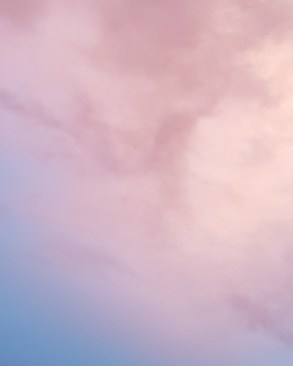
Being a very visual person, a fun thing I’ve liked to do since I discovered it a few years ago is checkout Pantone’s colour of the year. Interestingly, for 2016, for the first time ever, they announced TWO colours for the year: Serenity and Rose Quartz. (Side note: naming paint colours is a job I’ve always coveted.) This colour pairing was supposed to express something about the need for harmony in chaos. And it was very pretty in a sort of a kittens and candy-floss kind of way.
The irony, of course, is that on many levels 2016 was not a kittens-and-candy-floss kind of year and I’m not sure that as a global society we really embraced that whole harmony thing. But, in the spirit of aspiring to Serenity and viewing the world through Rose Quartz-tinted glasses, here is my writing achievements round up for 2016.
Just like 2015, I elected to focus on novel projects. I find that what with working a day job and spending time with my lovable and hilarious family, I have to be a bit strategic about how I spend my writing time. So I didn’t do much on the short story front. Here’s what I did do:
So what’s on the to do list for 2017?
And what’s the colour for 2017?
 A “tangy yellow-green” called Greenery. The comment from Pantone is all about vitality and the desire to rejuvenate.
Greenery bursts forth in 2017 to provide us with the hope we collectively yearn for amid a complex social and political landscape. Satisfying our growing desire to rejuvenate, revitalize and unite, Greenery symbolizes the reconnection we seek with nature, one another and a larger purpose.
Leatrice Eiseman, Executive Director of the Pantone Color Institute
I’m a big fan of green and, you know, nature stuff. But the cynical part of me can think of a few other associations for green in today’s “complex social and political landscape”, which are less kittens-and-candy-floss and more poisoned apple. Which is to say, I actually think green is a very fitting choice for 2017.


Wouldn’t it be lovely if 2017 did turn out to be all about rejuvenation and new growth and a renewed focus on environmental sustainability? And shared prosperity is actually pretty good too, so let’s have some of that.
Here’s to 2017. I hope all your good dreams come true, and we kill off a few of the nightmares.

It’s research. Honest.
I just hit 100,000 words on the current WIP tonight. Still got a bit to go, but that’s some kind of milestone, right?
Here’s a snippet of tonight’s inspiration:
The Sick Rose
By William Blake
O Rose thou art sick.
The invisible worm,That flies in the nightIn the howling storm:Has found out thy bedOf crimson joy:And his dark secret loveDoes thy life destroy.

 Leife Shallcross