The Museum of Broken Relationships

What a fascinating idea…

A new Museum of Broken Relationships will be opening in Los Angeles in May, and they are seeking donations of things that remind people of their once-broken hearts.

broken_relationships

It started as a collaborative project between two Croatian artists, Olinka Vištica and Dražen Grubišić, after the end of their four-year relationship.

You can read more about a selection of the objects it contains here.

The stories it would hold…!

Something Strange

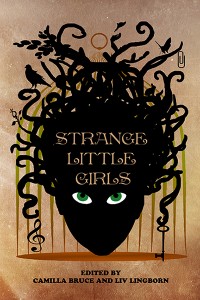
Belladonna Publishing have just announced the release date for Strange Little Girls: 14 March! It contains my story “Pretty Jennie Greenteeth”, which explores the perils of underestimating both middle sisters and stories told to scare children.

Here’s what editors Camilla Bruce and Liv Lingborn have to say about the anthology:

strangelittlegirls-200x300
Strange Little Girls

Strange Little Girls are made of sugar and spice, and something not quite as nice…
The strange little girls are orphans and changelings, suburban princesses, housewives, nuns and monsters. They are quirky and sweet, terrifying and heartbreaking. All of them a little lost, brimming with their own uniqueness.
In this strange little book of nineteen tales, Lotte goes swimming with her new fishy friends, Rin is freshly dug up, D’arcy strikes a bargain with the midnight mailman and Adelaide enters the mysterious House of Infinite Diversions. Our girls must fasten their bonnets and straighten their skirts to battle otherworldly dangers and challenging circumstances, internal struggles and doubts – and maybe find out who they really are.

Strange Little Girls is now available for pre-order from Amazon if you are quick!

Research Rabbit Holes #8 – with David Versace

Research Rabbit Holes can be fabulously inspirational, or horribly time wasting. They can take you in directions that are wildly irrelevant to your story, or can help you add layers of authenticity and meaning to your work. In this series of blog posts I’m sharing some of my favourite journeys down these Research Rabbit Holes, and I’ve also asked some other writers about their experiences falling into these diabolical black holes of eternal fascination.

20140809_150443This week’s guest is David Versace. I urge you to look out his stuff if you haven’t seen it before, because what comes out of his brain is often startlingly original and beautifully written. By way of example, and because he’s too modest to mention it below (or maybe he forgot), you can read his latest story, the flash piece Incidental, on Evil Girlfriend Media.

Tell me a little bit about your latest story and what sort of research you needed to do to write this story.

The story is called “Silver the Moon in Ascension”; it’s a military adventure about magic robots fighting against werewolves. Stop that, I’m serious! As you can probably tell, it’s a secondary world fantasy, so I didn’t need to dive too deep on the research for this one. This was a Wikipedia-skim over the history of alchemy; the general beliefs behind alchemy, the purported qualities of various base metals, their symbolic significance and in particular the weird rivalries and status games of its practitioners. Much of it has been (ahem) transmuted for story purposes, but the real stuff is more than weird enough for future use.

How does research fit into your writing process? Do you research first, then write, or do you research as you write?

With short stories, about half the time something cool I’ve read will prompt further reading and inspire a few ideas – and more reading. The rest of the time the general idea might come first and then I will realise I know nothing about international currency exchange laws or how a dog pound works, and then I hit the books. I try not to kill my writing momentum by going off to research, but sometimes it’s unavoidable. I find it’s usually better to know enough about what I’m describing before I start than it is to rewrite after I discover I was completely wrong.

Is research a distraction or an inspiration?

Both. So very much both. Many of my best ideas have sparked from an “I did not know that” moment – especially when I take an occasional plummet into some corner of history or another. On the other hand, nothing puts the brakes on a story draft like the sudden realisation that you have no idea how the pre-Columbian Mayan economy operated, and your story hinges on whether they kept bees.

(Just an example. I know almost nothing about the Mayans…but now I have an urge to visit the library).

When you’re writing secondary-world or alternate-world stories, how does real-world research contribute to your world-building?

The real world is a pretty good resource when you’re making up a secondary world. The fact that the Mayans kept bees (or not) is a delicious detail that could open all sorts of avenues for your dragon-ravaged, kite-riding fantasy culture. I like to grab cool details from all over the place and then figure out how they could plausibly work together. Semi-plausibly, maybe. If you squint. Those small details, extrapolated outwards, can shape societies and economies and ecologies in ways you’d never expect.

What was the weirdest thing you had to research?    

Over the last couple of years I have spent a lot more time thinking about the economics and politics of different track gauges – the distance between the rails on a train track – than I would ever have expected to.  Those weighty contemplations have had sadly little bearing on the train story that originally prompted them.

Now that you bring it up, I have a dark suspicion I may have wasted quite a lot of my time.

next_front_cover
Next

David Versace (www.davidversace.com) writes fantasy and science fiction in Canberra, Australia. His work appears in the CSFG anthology “Next” and in the forthcoming anthologies “The Lane of Unusual Traders” (Tiny Owl Workshop) and “At the Edge” (Paper Road Press).

He is a member of the Canberra Speculative Fiction Guild, who can vouch for his whereabouts on the night in question. He is a voracious consumer of speculative fiction, comics, wine, and television drama. He is teaching himself basic coding, bass guitar and how to write novels.

His heartfelt dream is to stop drifting aimlessly through the Australia Public Service, where he has worked for over 20 years. Until the dream becomes reality, he remains focused on corporate governance, risk management and business continuity, the sexy invisible lifeblood of well-regulated government.

He lives with his wife Fiona and two children. They tolerate his interests with patient good humour.

Down the Research Rabbit Hole #7 – with Ian McHugh

Research Rabbit Holes can be fabulously inspirational, or horribly time wasting. They can take you in directions that are wildly irrelevant to your story, or can help you add layers of authenticity and meaning to your work. In this series of blog posts I’m sharing some of my favourite journeys down these Research Rabbit Holes, and I’ve also asked some other writers about their experiences falling into these diabolical black holes of eternal fascination.

IanThis week’s guest is Ian McHugh, who sports what is surely one of the most resplendent beards in the Australian speculative fiction scene. His writing speaks for itself and has featured in publications such as Asimov’s, Clockwork Phoenix and Beneath Ceaseless Skies. He is renowned as a blunt and fearless (and therefore extremely useful) beta reader, and his critiques often start with a variation of: “Your story starts here on page 3.” He can frequently be found running workshops at the ACT Writers Centre, or teaching at the University of Canberra.

Tell me a little bit about your latest book/story and what sort of research you needed to do to write this story.

I’m currently writing a secondary world fantasy novel with early modern technology – steam engines and gunpowder weapons and whatnot – combined with magic. It’s not steampunk, I just wanted to step away from the standard medieval-era for adventure fantasy. So, I needed to know early steam technology, firearms and artillery, as well as naval warfare in the transition from sail to steam, siege warfare with early cannons and (because it’s a magical secondary world) golems.

What was the most interesting or surprising thing your research turned up?

This current project started with canals. The canal infrastructure from the early industrial revolution in Britain was incredible. They had actual mechanical lifts – not locks, lifts – for barges, where the barge would go into a gated tub and be lifted, water and all, straight up a cliff, with a counterweight tub coming down. So, that canal infrastructure became a bigger part of the story as I wrote, and a number of the pivotal moments in the story are built around canal things.

How does research fit into your writing process? Do you research first, then write, or do you research as you write?

I tend to research big things before I start writing, then research details as I go. As such, research is important to both my writing process and my procrastination process. It also means I do a fair bit of backtracking to retrofit corrected details as I write, so forward progress some days can be slow even if I’m working hardly rather than hardly working.

Is research a distraction or an inspiration?

I think once you have writer-brain, everything and anything can become research and inspiration. Generally speaking, research is inspiration. Research is also incredibly distracting. So many rabbit holes to disappear down! For example: I recently wanted to know if a 1700s era cannon was in an elevated position – on top of a wall, say – how close to the foot of the wall could it shoot? How did they shoot downwards? Could a cannon’s barrel be declined to shoot downwards? Was it ever the done thing? I lost hours. Found a multiplicity of blogs and rants and treatises and articles and instructional manuals about the optimum angle of elevation for maximum effective range for every kind of cannon and carronade and culverin and mortar and firestick. But what about when the other fellas are nearly at the bottom of the wall? I know they used a cotton bung to stop the cannonball rolling out when the gun was pointed down, but beyond that, I’m as ignorant as when I started.

When you’re writing secondary-world or alternate-world stories, how does real-world research contribute to your world-building?

Something like how to shoot artillery from the top of a wall might seem like a detail I could write around, but it’s the little details that can catch you. If I want to have my characters defend a fortress when both sides have artillery, I need to know what the actual real strategies were for both attacking and defending a fortress with artillery. Just because it’s a secondary world, I can’t just make shit up that sounds good to me, because it will probably be completely wrong. Whatever secondary world you’re writing, it’s going to have a lot of real-world stuff in it. You have to get that stuff right first, if you want your secondary world to have any kind of credibility, then figure out how your magic and dragons and whatevs fit in with it and change it.

Tell me about a time when your research threw up something that changed your story or a character.

I think you need to approach research with the expectation that it’s going to change your story, because research is a critical part of the process of developing and refining your story idea. And, if you’re like me and keep researching as you write, it’s also part of your drafting process. As such, every bit of research tends to have consequential changes for my plots and scenes and worlds. Less so with characters, I think, unless they’re non-human (and I find a cool way to pimp them up some more) or based on historical figures (and I turn up an interesting factoid about the real person).

I have a draft of a historical fantasy novel currently filed in the Cry For Help folder, which featured a version of Peter Lalor, the leader of the Eureka Stockade gold miners’ rebellion. I originally conceived him as a fairly idealistic figure, but then reading about the real man, I discovered that, after leading this rebellion to demand democratic rights for gold miners, he became a member of parliament and voted against those rights. Although the men he led to take up arms were Chartists and other advocates of democracy, Lalor wasn’t. He was a republican and a liberal, but not a democrat. Given that the conceit of my novel is, in part, “what if Lalor’s rebellion was successful?”, this tidbit threw up some interesting questions. So my version of Lalor now became a kind of Australian Robespierre and his rebellion/revolution followed the template of the French Revolution – including the Terror. Suddenly my character had way more depth and a way more interesting arc.

Have you ever researched something that made you abandon a story idea?

I said before that research is inspiration. Sometimes it’s also an obstacle or a roadblock. I don’t know that I’ve ever abandoned a story because of something my research turned up, but research often turns up inconvenient bits of knowledge that then need to be accounted for. In my story (deep breath) Extracted journal notes for an ethnography of bnebene nomad culture, I conceived an alien species with five genders. Initially, I just said they had three available sex chromosomes which could be paired in five viable combinations. But then I read about the other non-chromosomal ways that gender is determined in nature, like temperature variance and haplodiploidy (look it up), so I had to not only have my scientist protagonist consider those possibilities as well, but I had to consider for myself whether they were more realistic than what I’d proposed.

What was the weirdest thing you had to research?    

Research for stories is often esoteric, but I think it’s only weird to other people. If you’re geeking out on it, it never seems weird. And if you’re (if I’m) researching for a story, then you’re (I’m) probably geeking out. You just end up knowing a lot of unusual factoids – for my recent story Demons Enough I decided I needed to know how much blood is in an adult human (five litres, for anyone who’s interested). Knowing it wasn’t critical for the story (read it, you’ll see) and finding it out didn’t change how I told the story, but I was geeking out on the story, so I wanted to know. Not weird at all, see?

What kind of research have you needed to do for stuff that doesn’t exist? How do you approach that?

If you’re writing speculative fiction of any kind you’re always researching for stuff that doesn’t exist. I think most of the time, you’re riffing on what’s real – extrapolating technology or politics, mashing things together to make a monster, filing off the serial numbers from some meditative technique and saying that’s what you do to work magic. And if you’re not riffing on what’s real, you’re probably riffing on something someone else made up before. So, for me, I don’t think there’s a difference in the research approach – writer-brain is always switched on. It’s more what I do with it once I’ve done the research. If I’m researching something that exists, then I regurgitate it as accurately as possible into my story. If I’m researching something that doesn’t exist, then I bang together things that do until I get sparks of something new.
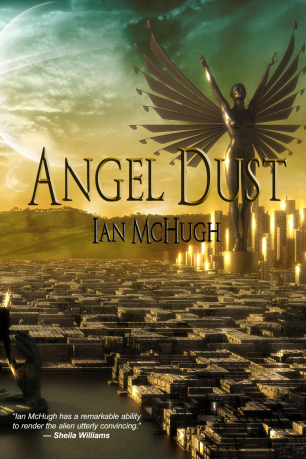
A gigantic metal angel statue stands over a city with one arm raised. The buildings in the foreground are low and dark, the buildings at the angel's feet are tall and gleam with the reflected light of a setting sun.Ian McHugh’s first success as a speculative fiction writer was winning the short story contest at the 2004 Australian national SF convention. Since then he has sold stories to professional and semi-pro magazines, webzines and anthologies in Australia and internationally. His stories have won grand prize in the Writers of the Future contest, been shortlisted five times at Australia’s Aurealis Awards (winning Best Fantasy Short Story in 2010), reprinted in Australian year’s best anthologies, honourably mentioned for world year’s bests and appeared in the Locus and Tangent Online annual Recommended Reading Lists. He graduated from the Clarion West writers’ workshop in 2006. His first collection of short stories, Angel Dust, was shortlisted for the Aurealis Award for Best Collection in 2015.

Ian lives in Canberra, Australia and is a member of the Canberra Speculative Fiction Guild.

Awesome words – elytra

DistressedEudicella2015web
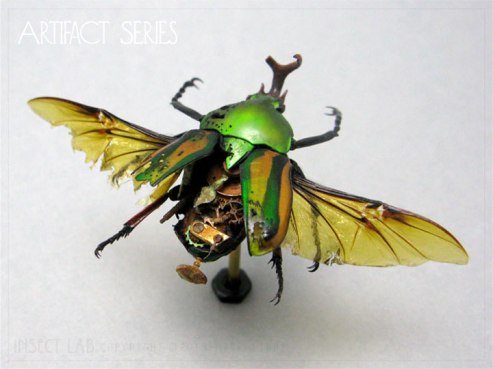
Cetonidae: Eudicella Gralli Orientalis, by Mike Libby

Elytra is the plural of elytron, a word that refers to the hardened forewings of some insects, such as beetles, which cover the transparent hindwings, which are the ones used for flying. In the sculpture above the elytra are striped green and orange.

Why is it an awesome word? Just is. Beetle wings are awesome. And elytra sounds utterly mystical. I didn’t know they were forewings. I didn’t know they were wings at all. If you’d asked me what that bit of the beetle was, I would have said “carapace” or “shell”. I only encountered the word for the first time today in this article about a new art pavilion being built at the Victoria & Albert Museum in London. Robots are weaving a moving canopy for the Elytra Pavilion, based on the “fibrous structures found in the hardened forewings of flying beetles”.

Speaking of art and elytra, check out the incredibly beautiful and just plain cool sculptures from artist Mike Libby. I’ve seen his steampunked insects around on Pinterest for a while now, but the crab “Ludlow” is… well… I mean he has interchangeable claws. Holy hell. I’m itching from wanting.

Ludlow

Down the Research Rabbit Hole #6 – with Cat Sparks

Research Rabbit Holes can be fabulously inspirational, or horribly time wasting. They can take you in directions that are wildly irrelevant to your story, or can help you add layers of authenticity and meaning to your work. In this series of blog posts I’m sharing some of my favourite journeys down these Research Rabbit Holes, and I’ve also asked some other writers about their experiences falling into these diabolical black holes of eternal fascination.

This week’s guest is Cat Sparks, an award winning author, editor and artist who, among other things, can rightly claim to be the inspiration for the latest Fablecroft anthology-in-the-making, In Your Face  (which is running a Pozible kickstarter at that link you can support if you hurry). If you’ve been to any of the spec fic conventions in Australia, you’ll have been lucky to escape without her snapping your photograph (well, not lucky. It’s actually kind of a privilege to be photographed by her).

She’s also penned my favourite line so far about an author’s relationship to research.

Bolstering my own ideas with research is like retrofitting the skeleton into a dissected organism.

Read on…

Tell me a little bit about your latest book and what sort of research you needed to do to write this story.

The working title of my current manuscript is The Salted Earth – a title that will probably change at some point. The novel forms the greater part of my PhD. My research investigates the way authors utilise scientific data in the construction of science fiction texts, specifically young adult climate change stories. All my own research has to be accurate. Everything has to be sourced. Not only has this PhD changed the way I write fiction, it’s changed the way I think about text in general. It’s turned me into a research junkie and I doubt I’m ever going back.

I need to keep up with climate science reporting as well as the fiction generated in its wake. These are rapidly expanding areas, not to mention terribly depressing. There wasn’t much climate fiction around when I began. Now everybody’s arguing about what terminology we should be using to describe it – anthropocene, hyper-object, slow apocalypse, cli fi – and whether or not it’s a subset of science fiction.

What was the most interesting or surprising thing your research turned up?

Two things:

  1. The legitimacy of weather modification technology. I had totally presumed there to be no such thing outside of tinfoil hat wackjob conspiracy theory. But the Beijing Weather Modification Office is as real as the CIA. They spend millions every year trying to keep rain of their parades.
  2. Gaps in the literature. Many people are currently writing climate fiction but there are loads of stories not being told, avenues not being investigated, which makes me feel that I need to get in there first. But I’m too deep in to my own research to change tack now with my major project. This leaves the option of short fiction and essays, but everything takes so much time to research and get right – or as close to right as possible.

How does research fit into your writing process? Do you research first, then write, or do you research as you write?

Here’s where the rabbit holes really kick in. Writing for me used to be a fairly surgical procedure. I’d get an idea, I’d write it down, flesh it out – produce a step sheet, and from that generate the story. Voila! That was back in the days when I could conceivably write a story in a day or three. Now it takes me three weeks just to work out what it is I’m trying to say. Ideas beget research, which begets further ideas of the vast, conflicting and potentially more interesting variety. Before too long I’m so confused I’m really not sure what I’m writing. That’s when archaeology kicks in; me with a metaphorical trowel on my knees trying to uncover structures in the narrative mud. Or something.

My story ideas ferment like liquor. Theme needs to be drawn out. I have many friends who churn out stories at an alarming rate, but I just can’t do that. Even when I think a story is finished, I’m usually wrong. I’ve still got three or four drafts left to do.

Is research a distraction or an inspiration?

Both. Constantly. Research seems to have become the entire point of the exercise. I’ve learnt that I don’t really know much about anything, not in a genuine sense. I’m just a spongy filter through which data passes, diverts and degrades. Bolstering my own ideas with research is like retrofitting the skeleton into a dissected organism. Add style for animation — then the story might take on a life of its own.

As a reader, stories not grounded in research bore me. We have become such technological creatures, with easy access data at our fingertips. It’s impossible to get through an Internet-fuelled day without learning stuff. Science fiction is a particularly research-needy field, which doesn’t make quality technobabble a requirement (although I am impressed with the writers who manage to pull that trick off convincingly). Science fiction readers are smart and they’re interested in real science. SF needs to come across as genuine and solid. Writers like Kim Stanley Robinson, Ian McDonald, Julie Czernada and Ramez Naam have set the bar very high for the rest of us.

When you’re writing secondary-world or alternate-world stories, how does real-world research contribute to your world-building?

Real-world examples serve as excellent templates for minting alternate world elements. Societies – be they real or invented – need economies and politics. Their food supply has to come from somewhere. People have been living in cities since the Neolithic revolution. Basing an imagined society upon the mechanics of a real one makes a lot more sense than reinventing the wheel. The writer doesn’t have to fully comprehend how everything in the alternate world ought to work, but they must be able to fake it with aplomb.

Fiction writers are like pirates. We steal everything that isn’t nailed down.

Cat portrait

Cat Sparks is a multi-award-winning author, editor and artist whose former employment has included: media monitor, political and archaeological photographer, graphic designer and manager of Agog! Press amongst other (much less interesting) things. She’s currently fiction editor of Cosmos Magazine while simultaneously grappling with a PhD on YA climate change fiction.  Her debut novel, Lotus Blue, is forthcoming from Talos Press in February 2017.

Note to self…

…Next time you’re having trouble getting the story flowing, Leife, stop and have a think about how you can make that particular plot point have emotional consequences for your characters.

Gustave-Courbet-The-Desperate-Man
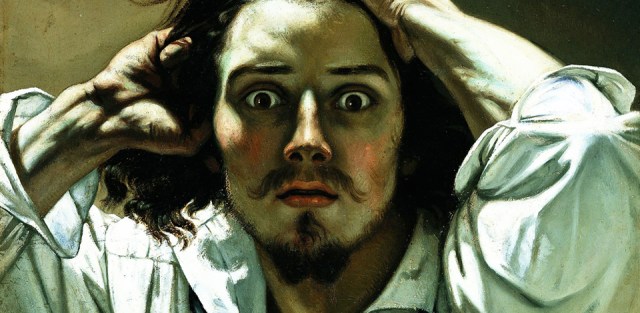
The desperate man, Gustave Courbet, 1845

I’m amazed at how often I forget basic pieces of writing advice. Then when I remember a thing I’ve known for years (usually when I’m in the shower), it’s an epiphany.

I’ve been struggling to move my current WIP along for the last couple of weeks. It’s been a bit puzzling. I’ve got that bit of plot all mapped out. I know what’s supposed to happen. But, somehow, I just haven’t managed to bring it to life.

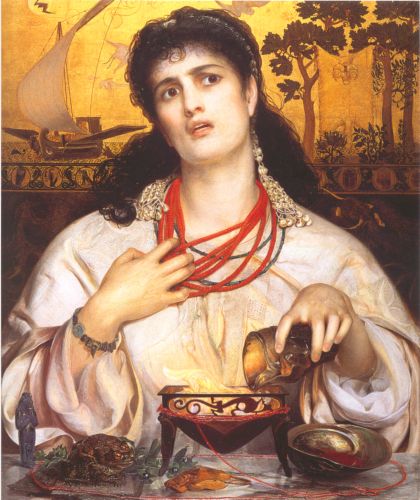
sandys-medea
Medea, Frederick Sandys, 1868

I’d put it down to the depressing necessity of returning to work after holidays, tiredness, general malaise, burnout from having gone hammer-and-tongs at the manuscript in the two months leading up to Christmas. I couldn’t figure it out.

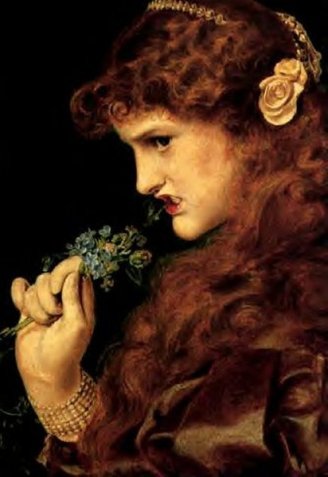
loves-shadow1
Miss Clive “In Love’s Shadow” or Proud Maisie, by Frederick Sandys, 1867

Then, in the shower today (of course), I worked it out. I had a plot point. I had a thing that had to happen to move the story along, but it was entirely mechanical and bereft of any emotional impact on my characters. I just had to spend a few minutes thinking about how I could use the scene to mess up my characters some more add an element of emotional narrative to the scene and Voila! It came alive.

Somewhere along the way I’ve picked up the term “emotional stepping stones”. This idea resonates strongly with me and how I like to write. I can plot out a sequence of events for my story, but what brings it to life in my mind and gets my creative juices flowing is the emotional touchstones of a character’s arc. Every time I think about a candy bar scene that I had to get up in the middle of the night to write, it’s a scene involving some kind of emotional high (or low) for my character.

So that’s my note to myself. To remember that my story isn’t just a sequence of events, but a series of emotional stepping-stones, and that, actually, is what keeps me interested.

So glad I sorted that out. Now have some more Pre-Raphaelite pictures of beautiful people having emotions.

JoanofArcdetail_Rosetti
Joan of Arc, Dante Gabriel Rosetti, 1882
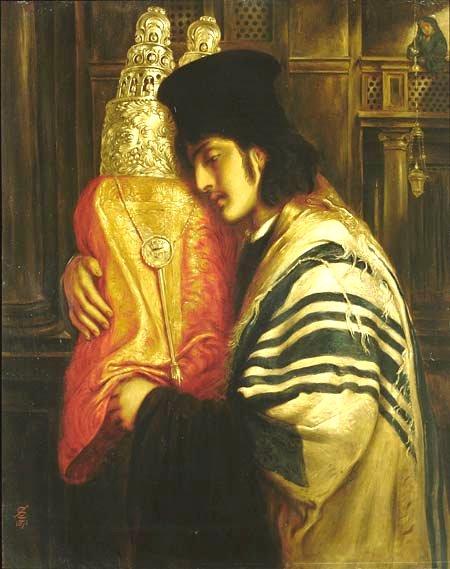
Simeon Solomon
Young Rabbi Holding the Torah, Simeon Solomon, 1871

Down the Research Rabbithole #5 – With Nicole Murphy

Research Rabbit Holes can be fabulously inspirational, or horribly time wasting. They can take you in directions that are wildly irrelevant to your story, or can help you add layers of authenticity and meaning to your work. In this series of blog posts I’m sharing some of my favourite journeys down these Research Rabbit Holes, and I’ve also asked some other writers about their experiences falling into these diabolical black holes of eternal fascination.

IMG_0100This week’s guest is Nicole Murphy, whose work as an author crosses a range of genres, including contemporary paranormal (the Gadda series), science fiction (the Jorda series), as well as contemporary romance and erotica with a hint of the unusual under the pseudonym Elizabeth Dunk.

Tell me a little bit about your latest book and what sort of research you needed to do to write this story.

Much Ado About Love is an adaptation of Shakespeare’s Much Ado About Nothing, so the
main bit of research was re-reading the play. It was working out the beats in the play, the main plot points, the theme and message of the play and also the characters. Part of this involved re-watching Kenneth Branagh’s version of Much Ado About Nothing – research can be fun! Otherwise, there were little bits of research I had to do for some facts. Eg I went through local council papers to find out how rezoning works. I had to find out how long it would take for a helicopter to get from Bankstown Airport to the south coast of New South Wales (Nowra-ish). Thankfully I based a lot of aspects of this story on places I’d been or things I’d done so it didn’t require too much research.

How does research fit into your writing process? Do you research first, then write, or do you research as you write?

It depends on the story. For example, in my gadda series, I’m often having to do research prior to the story in order to build the alternate world its set in. Otherwise, if I get it wrong, it can involve huge re-writes and that’s annoying. For the contemporary romances, because so many of them are set in places that I know, or in work situations I’m experienced with, there’s not a lot of research required. In that case, I’ll leave it until the editing phase and hope to blazes I’m not going to discover something that will completely change the story (although I did have to stop to work out the rezoning stuff for Much Ado About Love to make sure what I was thinking would work). Every once in a while, you reach a point in a story where you have to do research to move forward. An example of that was in the third book in my Dream of Asarlai trilogy, Rogue Gadda, where I just couldn’t write the scene I needed to write without knowing exactly where in Boston it was taking place and what the houses in that area looked like. I even needed to find some floor plans of the houses in the area to get an idea of how the inside of the houses would work. As a result I have a deep, abiding love for Google Street View and real estate websites.

Is research a distraction or an inspiration?

Prior to writing – an inspiration. The research I did on Irish mythology for the gadda books really informed a lot of the history and thinking around the world (including the name ‘gadda’, which is taken from the word ‘Dagda’, the name of one of the Irish gods). During writing – definitely a distraction. I like to get started with writing and plough through until the end. I think despite all this time, I have a fear that if I get pulled away from a story, I won’t come back and finish it so I don’t risk it by stopping.

Have you ever researched something that made you abandon a story idea? 

There was a point in researching the rezoning stuff for Much Ado About Love that I had a terrible, awful feeling that it wasn’t going to work in the story and I was going to have to rethink everything the antagonist was doing to get at the heroine. It made me sick to the stomach. But then I found a little clause, and realised there was a way around it. You see, generally councils can re-zone an area, but even if that means the wrong type of building ends up on it, the building is not illegal because the correct zoning was in place when it was built. So your block can be rezoned light industrial, but the family home is still safe. It simply means if the people who buy your house wanted to, they could knock your house down and build a factory on the land instead. Doesn’t threaten your building at all, so rezoning in itself wouldn’t cause a problem for my heroine. However, further digging showed if (for example) your family home wasn’t built on the correct zone in the first place or wasn’t properly approved, it becomes an illegal dwelling. At that point, I just had her grandfather forget to fill in some paperwork a few decades ago and hey presto – her livelihood and home are at risk. Phew!

What was the weirdest thing you had to research?

My favourite research story was for a scene for one of the gadda books that didn’t actually end up in print (although a version ended up in a short story). The gadda needed to touch something that contained evil that could contaminate them so couldn’t do it with bare skin. They couldn’t use their power either – it had to be a man-made thing that protected them. No gloves around, so they wrapped their hands in Glad Wrap. To find out if it worked, I did it to myself. I worked out you really do need another person to  wrap your hands in Glad Wrap and make it work but if done properly, you can make a Glad Wrap glove that will enable you to still use your hand while protecting your skin. Got some interesting looks from the husband that day.

***

Much Ado About Love

Opposites attract—but that doesn’t mean the road to happy-ever-after runs smooth…

Much Ado About LoveTrix Leon and Ben Anthony have two things in common—they don’t believe in love and, together, they set the sheets on fire. Their relationship is safe, uncomplicated, and just what they both need—until John Aragorn shows up and gives them a third thing in common: an enemy.


When their friends decide it’s time for Trix and Ben to admit to themselves—and each other—how they really feel, Trix and Ben are caught in a whirlwind of emotion, a promise of something more. But Aragorn is determined to destroy everything: Trix’s hard work, her future, and her chance at something more with Ben.

Now Ben and Trix are left fighting for the one thing that neither of them knew they wanted: love.

http://www.escapepublishing.com.au/product/9781760370015

Nicole Murphy is a writer, editor and teacher who writes contemporary romance as Elizabeth Dunk. Much Ado About Love is her tenth publication. Follow Nicole at her website (www.nicolermurphy.com), on Twitter (@nicole_r_murphy) or on Facebook (Nicole Murphy & Elizabeth Dunk – Author).

Down the Research Rabbit Hole #4 – with JT Clay

Research Rabbit Holes can be fabulously inspirational, or horribly time wasting. They can take you in directions that are wildly irrelevant to your story, or can help you add layers of authenticity and meaning to your work. In this series of blog posts I’m sharing some of my favourite journeys down these Research Rabbit Holes, and I’ve also asked some other writers about their experiences falling into these diabolical black holes of eternal fascination.

Today’s guest is JT Clay, who writes books as bitingly funny as they are thrilling and adventure-packed. Prior to focussing her career on writing, she worked in counter-terrorism and law before switching to waste management, which generated much more dinner-party debate. People care about rubbish. She now works as a technical writer and looks after her mixed-species family. A Single Girl’s Guide to the Zombie Apocalypse won a 2010 Olvar Wood Fellowship Award and is her first published novel. She lives in Canberra, which she claims is not as dull as people say, but she is notorious for making things up.

Pork Sausage

My first novel, A Single Girl’s Guide to the Zombie Apocalypse, involved more research than you’d imagine. I watched Bear Grylls on repeat, read up on SAS survival techniques and hung out in zombie chat rooms (which are exactly as weird as you’d expect).

Lately, I’ve been working on a time-travel farce set in Auckland in the Roaring Twenties. Although a sci-fi comedy, I approached it like a historical project. I read textbooks, biographies and fiction written during and about the period. I browsed old photos. I watched reams of period TV and endured The Great Gatsby in many, many formats. I kept a log of anachronistic terms and discovered, for instance, that back then you could take your gimp in hand and make love, in public, without social or legal repercussions.

So when Leife asked me to blog about research, I jumped at the chance. I’d already done the groundwork.

When I began writing this time-travel farce, I gave myself a three-week research holiday, during which I wrote only notes. No outlines, no scenes, no dialogue. No fiction. Between the library and the Internet, this research cost only my time.

A lot of primary material lives online. I watched Charlie Chaplin reels. I perused posters exhorting men to ‘grow a mustache – that’s one thing the girls can’t do!’ I listened to old Dippermouth sing and heard a Model T Ford sputter down the road. I read the ‘Auckland Star’ and ‘New Zealand Truth’ for the month of February 1923. I found a recipe for asparagus ices.

What can’t you get off the Internet?

Smells, it turns out. My biggest problem was working out what the place smelled like. I tried searching the Web for scratch ‘n’ sniff sites. Don’t do it. The results are unsavoury.

So I did what any decent author does. I made it up. As a result, I’m much more sympathetic to all those fantasy novels that open with a standard stinky wharf description. They may not be original, but they’re tangible, and more importantly, they meet reader expectations.

I’ve learned about those.

There’s a duel in my novel. If you’re thinking that a duel in 1923 Auckland sounds unlikely, you’d be right. But not impossible, with Auckland’s final duel being fought in 1935.

I couldn’t decide whether my hero would select pistols or swords. Then I heard about Bismarck’s sausage duel, featuring two pork sausages, one laced with roundworm. More of an eating contest really, but an exciting one.

And why not? I was writing a farce, after all. A specialist historian had offered to review the whole thing for free. All I had to do was take copious notes so that, when he challenged the pork sausage incident, I could defend myself.

But first, I tried it out on my partner. The idea, not the pork sausage. The ‘scratch n sniff’ Web search had turned me off practical experimentation by this stage.

My partner nixed it.

But it really happened! Or it would have, if Bismarck hadn’t chickened out.

He didn’t care. It didn’t matter. Too silly, he said. Stick to the pistols.

So I slouched off and learned how to fire a Webley Mark IV revolver via an Internet demonstration delivered by an alarmingly bearded Texan who sounded familiar. I may have met him before in a zombie chat room.

What’s the moral? Do your research, but remember – authenticity beats accuracy every time.

OLYMPUS DIGITAL CAMERA

J.T. Clay
Author of A Single Girl’s Guide to the Zombie Apocalypse
jtclaywriter.wordpress.com

Goodbye 2015, Happy 2016!

2015-2016

In preparation for doing this roundup, I’ve just reviewed my writing achievements for 2014, by way of seeing how I went in 2015 by comparison. It’s brought home to me the truism that you should never compare your writing achievements to anyone else’s – not even your past self’s, apparently.

I made a deliberate decision to focus on a novel projects in 2015, and to try not to be distracted by short stories. I still wrote a couple, bad girl, but made no sales. Two of the stories I sold in 2014 came out in 2015, so it wasn’t a complete wasteland of ignominy. Also, one of my short stories from 2014 was listed on Ellen Datlow’s recommended reading longlist, which is a definite win.

I achieved a fair bit under the heading of “novel projects”. Novels are, of course, more complex beasts than short stories, and my achievements here feel more intangible, but I’m counting them anyway.

I got additional feedback on Novel Project #1, rewrote a chunk of it, got it into submittable form, wrote a synopsis (a proper one) and developed the basis of a pitch and a query letter.

(Most writers I know complain a lot about having to do write synopses and query letters and I am happy to add my own mewling whine to the cacophony. It was horrible. It was hard. It was not about crafting beautiful imagery or sculpting layered, authentic characters or building immersive worlds or choreographing breathtaking action. But it also kind of was, in the most abbreviated, chop-all-its-limbs-off and pull-out-its-beating-heart way possible. In the end, it was, I confess, deeply satisfying. Like the way I imagine it would feel after having run some kind of endurance race. Painful process, fist pump outcome.)

I submitted NP#1 to several agents, got one request for a full MS, many rejections, and one chunk of invaluable feedback. So I’m calling it a win.

I have now submitted it to a couple of publishers, and so we wait…

I did a huge amount of planning and research for Novel Project #4, and also a big chunk of writing. It’s now sitting on just under 60,000 words. I wish it were further along, but the win I’m counting here is in the planning process. I’ve never properly planned a novel before, so this was a first. I’m pretty happy with my novel plan and I feel like I really know where I’m going for with this story (and its sequels). So: yay.

So… in contemplation of the year ahead, what are my plans and goals? Hmm. Finishing the first draft of NP#4 is high on the list, along with getting it beta-read, and beginning the process of getting it into the kind of condition worthy of a publisher/agent’s attention. I definitely want to reacquaint myself with the art of writing short stories and make another couple of sales. I want to do some overseas travel, which might not sound like writing, but it’s definitely research. I’d also like to focus a little bit on developing my craft and perhaps take some time (and spend some money) on doing some courses/workshops.

Here’s to chasing dreams and wrestling them into reality. I wish you all a happy, safe and prosperous 2016.

xox

HNY 2016