Reading for writing: reflections on a recent read

Coffee time

I finished one of my latest reading-for-pleasure ventures recently, and it gave rise to some useful reading-for-writing introspection and analysis I thought might be interesting to share. The thing was, it certainly had its flaws – some extremely annoying ones at that. But, even so, I found it an overall satisfying read and I’m even keen to seek out the next one in the series and give that a go.

So what’s all that about? How does that work?

And, more importantly (and in keeping with the theme of my earlier reading-for-writing posts), what can I learn about this for my own writing?

First, the flaws.

The story was a whodunnit. Not an actual murder mystery, but a tale of two people trying to solve a spate of serious crimes, in which their lives were very much at stake if they failed.

The villain turned out to be someone known to the protagonist – in fact, someone the protagonist knew well and admired. (OK so far. A bit standard-operating, but solid.) The villain also turned out to have an intimate connection with the arch-enemy of the protagonist’s off-sider and potential love interest. (More interesting.)

What bugged me about the way the plot was constructed, however, was that the villain didn’t get any screen time (so to speak) until the big confrontation at the end. Sure, the narrative had mentioned this character, and had even done so in conjunction with an important clue. But the reader never got to actually meet the villain in her lamb’s clothing, never got to witness the relationship between her and the protagonist, and never even got the slightest hint about the existence of someone with this kind of relationship to the arch-enemy.

The effect of this was that:

  1. The reader couldn’t involve themselves in unravelling the mystery with the characters by pulling together their own theories and testing these against the characters’ sleuthing abilities. There was no Ah-ha! moment where we saw how the puzzle pieces fitted together, because we never knew half the pieces existed.
  2. The reader was unable to engage with the protagonist’s sense of gut-punch betrayal when the identity of the villain was revealed. Further, during the climactic scene, when the villain behaved in a way calculated to provoke a particular emotional reaction from the protagonist, the reader had to be told she was experiencing this reaction, rather than experience it with her (which we would have been able to do, had we been able to build our own relationship with the villain earlier in the story.)
  3. The connection to the off-sider’s arch-enemy came off as ridiculously convenient. It could have been a revelation. But it was essentially meaningless.

So what did I learn from this?

Seed key plot devices early, whether they’re characters, emotional connections or information.

But why did I like the book?

This is actually more important than the book’s flaws, because it’s this that has me hooked and interested in getting hold of the next one. I have to say, it’s embarrassingly simple.

Frankly, it was all down to the two main characters and the relationship between them. I’m not sure it was exactly a romance, but it was intriguing, and emotionally charged, and I want to know where they go next.

And what does this teach me?

Make my characters, their relationships and their emotional journeys arrestingly interesting. (Note: interesting does not mean tortuous or outlandishly dramatic. It means relatable, charismatic and one step away from being completely satisfying.)
Paying for our passion – writing v. sleep

If you haven’t checked out the excellent Paying For Our Passion series of guest author blogs David McDonald is doing over at Ebon Shores, I highly recommend it. Mostly because of the insight it provides into how different writers make this writing thing work, but also because (full disclosure) my guest blog went up yesterday.

Here’s what David has to say about his inspiration for the series:

Juggling your creative time with a full time job can be draining at the best of times, how much more so when you feel like the time put into writing is being wasted because it isn’t immediately a huge success? And, what about people who have to juggle being a parent or a full time carer as well? People with a chronic illness? How do they cope?

Because this is a personal issue, we often keep it to ourselves. Worse, sometimes we don’t talk about it because we think everyone else is living the rockstar writer lifestyle and we are the only ones struggling to find that balance–and we don’t want to look like a failure. I thought this was a subject worth exploring, and hopefully seeing how others deal with these challenges might a) help new writers realise they aren’t alone b) give us all ideas that might help.

So far, David has had guest posts from a range of Australian authors and editors, and has even started profiling some New Zealand authors after a recent trip there. I highly recommend the post from writer and poet Maureen Flynn as one that’s particularly moving.

So, what I have I sacrificed in the pursuit of literary glory? Well, the hint is in the title of this post. It’s fair to say my creative career can be characterised as a constant battle to balance the conflicting needs for sleep and writing time. Go read the article, and check out some of the others!

Research: fencing

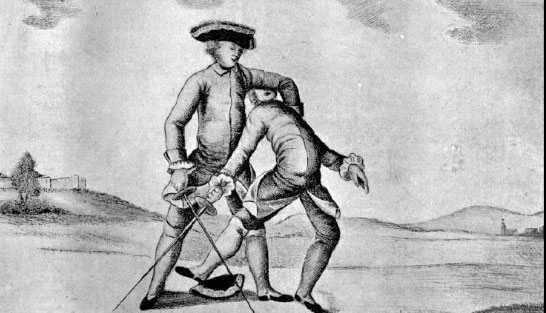
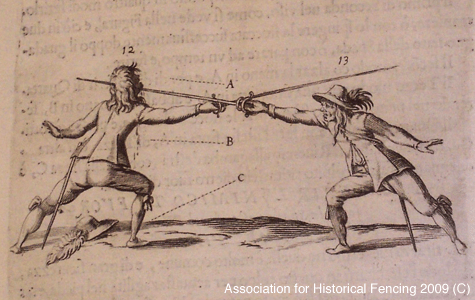
Tonight I’m doing some research on fencing schools in London in the 18th century. So have some awesome pictures of 18th century fencing.

smallsword 1

smallsword 2

fencing

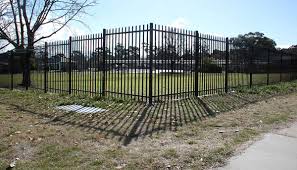
Being a very visual person, I do a lot of searching for useful images. So I was very puzzled when my last lot of Google image searching on fencing schools produced an abundance of images like this:

school fencingSigh. We live and learn to refine our search terms.


Book launch! Aurealis Awards! All the fun!

Last Saturday was a whirlwind of genre fiction goodness. First up I spent the afternoon at the launch of Ian McHugh’s award-nominated collection Angel Dust. His stories range from whimsical fantasy about turning fairies into wishes right through to one of the most fascinating and memorable sci-fi stories I’ve read, which interrogates how our assumptions might hamper our ability to understand and relate to an alien species. You should get it and read it. It’s awesome.

Ian Ian's launch

After that, I headed home for a nice cup of tea with the eternally energetic Nicole Murphy, which provided a much needed breather before the evening’s entertainment kicked off: the 2014 Aurealis Awards!

This year, as president of the CSFG, I was invited to present the awards for best collection and best anthology. I had the very great pleasure of being able to hand over the former to the formidable writing team that is Angela Slatter and Lisa L Hannet for their collection, The Female Factory; and the latter to Garth Nix, who was collecting on behalf of Alisa Krasnostein and Julia Rios, for their anthology Kaleidoscope: Diverse YA Science Fiction and Fantasy Stories.

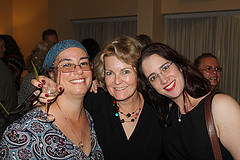
Seeing as it was also the 20th anniversary of the awards, we were encouraged to get into the spirit by donning 90s clothing. My effort was limited to digging out from the back of my cupboard a pair of boots I bought in 1992 (covered in approximately 20 years of dust and cobwebs) and teaming these up with a felt fedora and a pair of big hoopy earrings. But some people went to quite a bit of effort…

Ginger (aka Melbourne writer Maureen Flynn), Posh & Baby Spice


It was a great night, and I really hope I can go next year when it will be in a location yet to be disclosed, but probably not Canberra. Check out the full list of nominees and winners over on the Aurealis Awards blog.

Garth Nix, Margo Lanagan, Ian McHugh
Ian McHugh, Dennis Murphy, Me
Shauna O'Meara, who didn't stuff up the powerpoint slideshow even once
Shauna O’Meara, who didn’t stuff up the powerpoint slideshow even once
Tehani Wessely, Angela Slatter, Lisa Hannet, Liz Grzyb
Thoraiya Dyer, Cat Sparks, Rivqa Berger


Keri Arthur
Keri Arthur

All photos courtesy of Cat Sparks

Reading, for the love of it

I was only going to do two posts on reading. Then Elizabeth Fitzgerald asked me what makes me really want to read a book, and I conceived a third. Then I read this Huffington Post article: 20 New Classics Every Child Should Own, and a fourth popped into my head. I decided to do this one first, just because reading to my kids was first  on my list of why I read books.

lemony snicket

The Huff Post article made me sad my kids are past the age of picture books. (I consoled myself with the thought of the new list of wonderful gifts I now have to chose from for my littlest friends.) But it also made me think about why I choose the books I do to read to my kids. This list of 20 new classics was compiled by Jordan B Nielsen, a children’s book buyer for an independent book store, and reviewer of children’s fiction. She was driven to create this list as a response to her dismay over her experiences with adults who, buying books for children, eschew purchasing more recently written books for the books that they loved as a child.

Nielsen is sympathetic; she acknowledges that the choices of these adults for ‘time-worn favourites’ come from a desire to share with a child a much-loved reading experience from their own childhood. But, as she rightly points out, there are so many really wonderful new books for kids out there.

This made me think about why I choose the books I do to read to my kids. Without doubt, there is a selection in there of books I have read and loved, and that have played no small role in shaping the literary landscape in which my imagination plays. A selection of these includes:

  • All But A Few, Joan Aiken
  • The Harry Potter books, J K Rowling (technically I read these as an adult, but I started before I had kids.)
  • The Snow Spider, Jenny Nimmo
  • The Ramona books, Beverly Clearly
  • The Faraway Tree & Wishing Chair books, Enid Blyton
  • Howl’s Moving Castle (which might be the best book ever written) and its sequels, by Diana Wynne Jones; actually, make that pretty much anything by Wynne Jones
  • Pippi Longstocking, Astrid Lindgren
  • The Ordinary Princess, M M Kaye
  • Playing Beattie Bow, Ruth Park
  • Pretty much anything by Roald Dahl.

But I am totally with Nielsen in agreeing that this is only a small selection on the vast and wonderous selection of enchanted worlds on offer for children thesedays. Some stories that were not around when I was 12, but which we have dived into gleefully (I invite you to imagine the howls of protest when I close the book and insist they go clean their teeth after I have read myself hoarse over the course of three chapters in an evening):

  • The Skullduggary Pleasant books by Derek Landy (A skeleton detective? Awesome. Not to mention his equally awesome teenage sidekick, who is the protagonist and a great female character.)
  • The Spiderwick Chronicles by Holly Black. Oh how I wish these had been around when I was a kid.
  • The Series of Unfortunate Events by Lemony Snicket. I can’t tell you how much I love this man’s work. These books were written to be read to kids by adults.
  • The Beasts of Clawstone Castle, Eva Ibotson
  • The Thief Lord, Cornelia Funke
  • The Tashi stories by Anna Fienberg

Which brings me to the one guiding principle I have in selecting books to read my kids. I don’t so much want to share with them the experience of reading a specific book, as the experience of being completely transported by a wonderful story. The clues I look for? An intriguing title, a beguiling concept, fascinating characters, a world that makes me want to get dinner over and done with so we can pile onto my son’s bed and sink together into the pages.

Parenting win
Parenting win

My 12 year old daughter just finished reading the Infernal Devices series by Cassandra Clare – books I have not read (yet). She came out of her room yesterday, and curled up next to me on the couch with a sad little look on her face. She snuggled up against me and said forlornly “I’m going to miss them.”

She was talking about the characters in the story. And that makes me feel like I’ve done it. I’ve shared enough of my own reading experiences with her, and we’ve shared enough new ones together, that I’ve succeeded in instilling in her the love of reading and story that is so precious to me. Now she can go off and have her own experiences that will enable her to shape a unique landscape of imagination of her own. I have given her that gift.

Score.


Reading for Writing Part 2

In my last post, I talked about how being a writer has limited my capacity as a reader. But I don’t want to give the impression that I don’t read any more. Far from it. I just find I have to be a lot more selective these days.

A small portion of the teetering to-read pile.

So what do I read and how do I prioritise? Well, here are some thoughts. In terms of priority, it’s roughly in order, but subject to change on the basis of necessity or whim.

1. I still read to my kids. I’ve put this first, because it happens almost every day, so it probably makes up the bulk of my fiction reading, even though it’s not technically for me. They’re 12 & 10 now, but they love being read to. Right now we’re reading Joan Aiken’s All But a Few. But we’ve worked our way through plenty of fabulous books. This is pure, unadulterated fun.

2. Books I really, really want to read. These are the ones that furnish the landscape of my imagination. These books have built the pantheon that I want to be a part of as a writer. They feed my muse and inspire me.

3. Books I want to read because they’re going to help me improve my craft. They might be beautifully written, or have an intriguing story premise, or won an award, or have caught the zeitgeist, or be somehow relevant to my own work.

4. Beta reading for friends. It might not be for leisure, but it’s reading fiction written by someone else and it certainly helps my own craft.

5. Non-fiction reading, usually for research, but sometimes for fun. Hell, the best research is fun.

6. Catching up on published work by friends. This is basically an impossible task now. But I do what I can.

And that’s it. That’s all I can fit in.

What I find interesting, now I’ve put that list together, is how all of it ties back, somehow, to supporting my own writing. It might just (just! *rolls eyes*) be reigniting my passion for stories and beautiful words, or it might be something more concrete, like learning more about a historical period, or how to construct a murder mystery. But I can’t not read without that writer part of my brain ticking over, hoarding the good stuff and putting squiggly red lines under the bad.

Which tells me, ultimately, that time spent reading is time well spent. Even though – or perhaps because – it’s rarer and more precious than it used to be.

Reading for Writing Part 1

I’ve had quite a literary week. On Monday I went to see the entertaining and debonair Joe Abercrombie talking about his new book, Half the World, at Harry Hartog’s (and what a beautiful Canberra bookshop that is.) I had the opportunity to chat to him before and after his talk; beforehand I quizzed him about the sex scenes he writes (!!!) and after the crowds had drifted off my CSFG buddies and I had a chance to chat to him about a bunch of things including the fantastic covers on his books.

Meeting Joe Abercrombie at Harry Hartog's
Meeting Joe Abercrombie at Harry Hartog’s (That’s me on the right, behind Shauna O’Meara. The rest of the CSFG crew, behind Joe, from left to right: Craig Cormick, Ross Hamilton, Tim Napper)

Then on Wednesday, we had our first general meeting of the CSFG for 2015, which my good friend Kimberly Gaal and I kicked off with a session on goal setting for writers.

How are these two things linked? Well, one question Joe was asked on Monday night was what is he reading now? His initial answer to this was interesting: he said “I don’t read anymore.”

I found this interesting because a quick Google search will throw back at you plenty of quotes from high profile writers telling aspiring authors that the one thing they must  do is read. But even so, this is not the first time I’ve heard a high-profile author say they just don’t read anymore.

Joe then went on to demonstrate that, actually, he does read (of course). But when he talked about reading, it was very clear that it’s not something he does for leisure these days. He reads a lot of non-fiction for research, and he indicated the fiction he reads now is mostly in genres other than what he writes (dark fantasy).

At our CSFG meeting on Monday, one of the things we talked about in relation to goal-setting, was doing a reading challenge as a useful way to expand our horizons, connect with readers, understand markets and feed the muse. (Here’s a great post from Elizabeth Fitzgerald over at Earl Grey Editing about reading challenges.)

This all got me thinking about what and why I read. I absolutely do not read anywhere near as much as I used to. I have no hesitation in saying it is one of life’s great pleasures. I was an inveterate bookworm as a child. I read Charlotte’s Web when I was six. I started reading the likes of Anne McCaffrey and Tanith Lee when I was about thirteen. I read and read and then I reread and reread again. In University, I wrangled my degree so that it was about 85% English Literature subjects. This meant I (was supposed to) read something in the order of thirty to forty books a year. I can’t say hand-on-heart that I did read that many, but I read most.

But now…

I find reading uses a similar part of my brain as writing. It also scratches a similar itch and fills in the same few spare hours. So for me, it’s often a choice. Read or write. Still, I definitely do read. I just have to be very selective. I’m also pretty brutal now about finishing books. If it’s not doing what I want it to do for me, I stop reading it. I do not have time to persevere with duds. I set aside one massively popular bestseller just recently because I could not stand either of the two main characters and I did not want to spend another minute in their company. If I decide I want to know how it ends (I’m not fussed right now, I don’t want either of them to prevail), I’ll go see the movie.

Having said all that, I do still read, and it is still one of my favourite ways to spend an hour. Or three. Or eight. Like most people who love books, I have a to-read pile that in its darker, more unstable moments could kill small children if it toppled over. So in my next blog post, I’ll talk about what and why I read, and how I prioritise that growing stack beside my bed. And the one on the bookcase. And the one beside the bookcase on the floor. And –

*sound of books falling*

*muffled screams for help*

The Never Never Land

knitting

How could this have slipped my mind? My only excuse is that I’ve been crafting a new story, so my brain has been very much off in another world entirely in the last couple of weeks.

On 3 February, the Canberra Speculative Fiction Guild announced the table of contents of their upcoming anthology The Never Never Land, and my story Adventure Socks is in it!

Congratulations to everyone involved. The lineup is fantastic, and includes a bunch of authors I’m very proud to sit alongside, as well as some new names.

I have to thank my fiddle teacher, the extraordinarily gifted artist Jacqueline Bradley, for the inspiration for this one. She makes sculpture using familiar objects in quirky, unexpected and thought provoking ways. While this story is not a direct response to any specific piece of hers, the idea behind it sprang from a conversation we had and feels to me like it has perhaps captured a tiny spark of the homely, whimsical spirit of her work.